

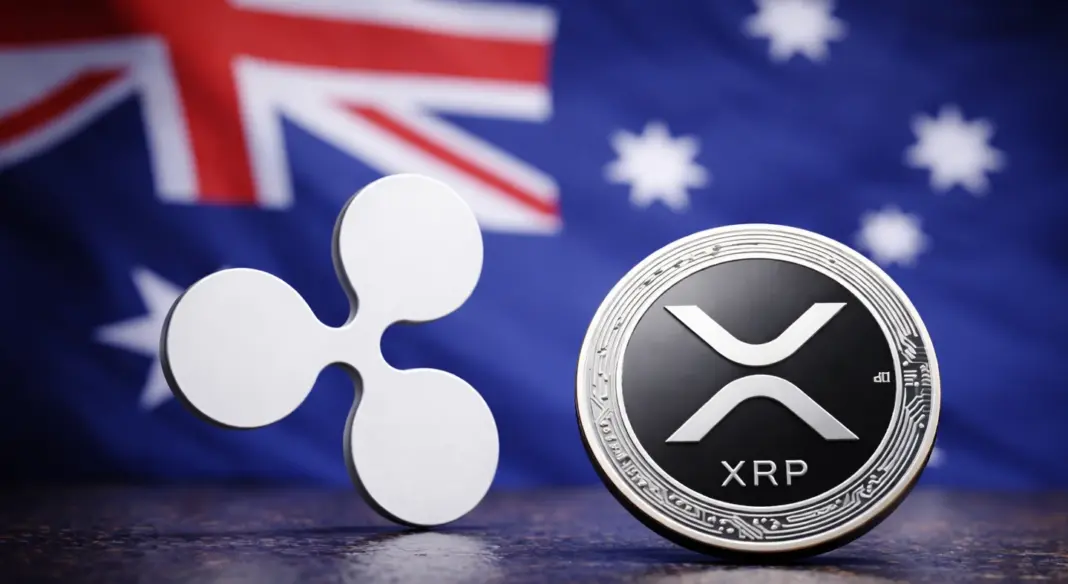

XRP’s story currently runs along two very different timelines. One happens slowly through regulatory work and payment infrastructure.
Ripple is seeking licensing in Australia to expand its regulated payments business.
The other timeline moves much faster. Reports suggest demand for XRP-linked exchange-traded products has remained resilient even after a sharp market drop.
Stay ahead in the crypto world – follow us on X for the latest updates, insights, and trends!🚀
These two developments are related, but they operate on different layers of the market.
Licensing builds infrastructure. ETF demand reflects positioning.
Ripple’s Australia license push
Licenses rarely generate excitement on their own, but they are one of the most important signals in the development of regulated crypto infrastructure.
When a company pursuing payment services seeks a license in a major jurisdiction, the goal is to operate within the financial system rather than outside it.
A license can allow a company to work more easily with banks, financial institutions, and regulated partners, as it can expand the range of services offered and reduce the uncertainty that often surrounds crypto businesses operating without clear oversight.
In Ripple’s case, pursuing an Australian license signals an effort to strengthen its payments network through formal regulatory channels.
This kind of work moves quite slowly. It involves compliance reviews, regulatory approvals, and coordination with financial institutions.
The impact rarely appears in short-term price movements, but it can influence long-term market access.
Why ETF demand can stay strong during a drop
The second track involves investor positioning. Reports that XRP-linked ETFs continue attracting demand even after a major price decline may seem counterintuitive at first glance.
Price drops are often interpreted as a sign that interest has disappeared. In reality, demand can remain active even while markets fall.
Some investors treat price declines as opportunities to accumulate exposure, while others follow systematic allocation strategies that add to positions at specific intervals regardless of market sentiment.
In addition, ETF flows can reflect institutional positioning that shows up gradually rather than reacting instantly to price changes.
When strong selling pressure meets steady demand, prices can still fall if supply outweighs buyers in the short term.
That situation can produce the appearance of persistent interest even during a drawdown.
Infrastructure and market positioning move at different speeds
The broader signal from these two developments is the contrast between infrastructure timelines and market timelines.
Regulatory work, licensing, and payment network expansion move slowly. They often take months or years to show clear results.
On the other hand, market positioning moves quickly. Investor sentiment can change in hours or days, especially in volatile crypto markets.
Both processes can occur simultaneously. Infrastructure development may continue quietly while markets experience sharp swings.
What signals matter going forward
Several indicators will shape how this story moves forward. Progress on Ripple’s licensing efforts in Australia will show whether payment infrastructure continues to expand under regulated frameworks.
Trends in XRP-linked ETF demand over longer periods may reveal whether investor positioning stabilizes or fades as volatility continues.
Regulatory headlines and legal developments can also influence sentiment quickly, sometimes overshadowing slower infrastructure progress.
Short-term price movements and long-term infrastructure building often operate on separate clocks. But they are the two sides of the same coin.

Crypto market researcher and external contributor at Kriptoworld
Wheel. Steam engine. Bitcoin.
📅 Published: March 13, 2026 • 🕓 Last updated: March 13, 2026
✉️ Contact: [email protected]
Disclosure:This article does not contain investment advice or recommendations. Every investment and trading move involves risk, and readers should conduct their own research when making a decision.
Kriptoworld.com accepts no liability for any errors in the articles or for any financial loss resulting from incorrect information.
