



Bitcoin mining difficulty ended 2025 with a small increase to 148.2 trillion, based on data tracked by CoinWarz. The metric measures the computing challenge required to add a new block.
CoinWarz projections show the next Bitcoin difficulty adjustment may land on January 8, 2026. The estimate points to block height 931,392.
Stay ahead in the crypto world – follow us on X for the latest updates, insights, and trends!🚀
The same projection suggests mining difficulty could rise to about 149 trillion. That move links to slightly faster block production than the network’s target pace.
Bitcoin difficulty adjustment responds to block time below the 10 minute target
Bitcoin targets an average block time of about 10 minutes. That schedule keeps block production steady across the network.
At the time of the report, average block time sat near 9.95 minutes. Because blocks arrived a bit faster, a higher Bitcoin mining difficulty reading becomes likely at the next checkpoint.
The Bitcoin difficulty adjustment happens every 2016 blocks. That cycle usually takes close to two weeks, so the system regularly recalibrates to match real-time network conditions.
Bitcoin mining difficulty hit fresh highs during 2025 swings
CoinWarz records show Bitcoin mining difficulty reached new highs in 2025. The history chart covering 2014 to 2025 shows stronger climbs during periods of heavy network activity.
The report noted two sharp rises in September 2025, during a Bitcoin uptrend. Later, it referenced a price collapse in October tied to a historic market crash.
Despite that shift in market conditions, mining difficulty stayed near the top of its range into year end. That matters because higher difficulty raises the computing work required per block.
Bitcoin hashrate keeps climbing as difficulty pressure builds
The report also pointed to rising Bitcoin hashrate, using CryptoQuant as the cited source. Hashrate acts as a proxy for total computing power securing the network.
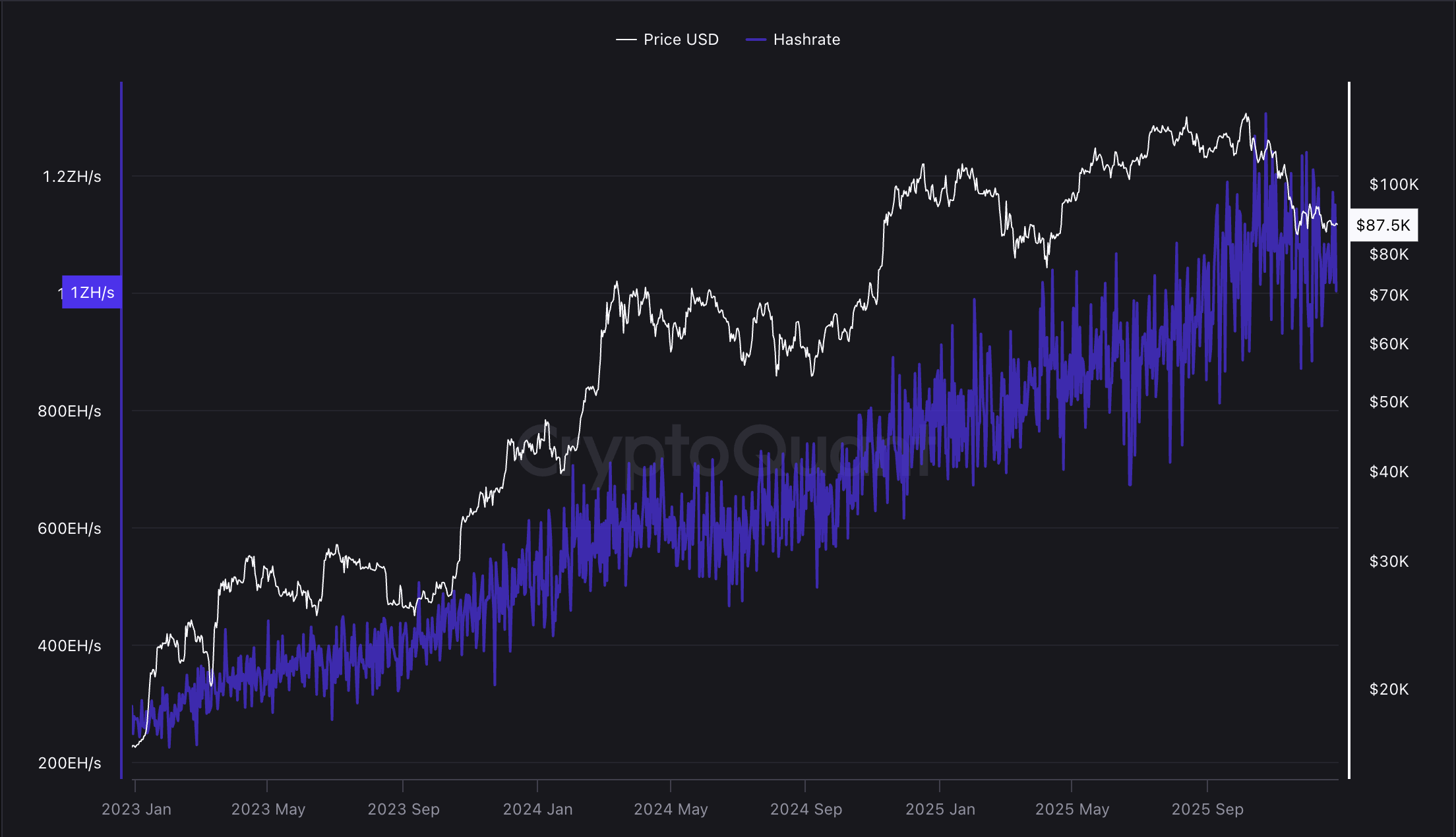
When Bitcoin hashrate increases, blocks can arrive faster than the 10 minute target. As a result, the next Bitcoin difficulty adjustment often moves upward to slow block production back toward the target.
This link between Bitcoin hashrate, block time, and Bitcoin mining difficulty drives the projected January change. CoinWarz also shows a gauge tracking block progress toward the next adjustment window.
Bitcoin mining difficulty adjustment supports decentralization and limits 51% attack risk
The report described the Bitcoin difficulty adjustment as a safeguard for decentralization. The system reduces the impact of sudden surges in computing power from one miner.
A 51% attack can occur if a single miner, or a coordinated group, controls most of the network’s computing power. The report tied that scenario to risks such as centralization and double spending.
It also described a related concern even without a full 51% attack. A miner with very large resources could mine blocks faster for a period, collect more rewards, and then sell BTC, which the report linked to potential selling pressure.
Bitcoin mining difficulty protects the supply schedule through 2016 block recalibration
The report framed Bitcoin mining difficulty as a tool that keeps block production consistent. That consistency helps maintain Bitcoin’s programmed issuance rhythm over time.
Because the network recalibrates every 2016 blocks, it can react to changes in Bitcoin hashrate without manual intervention.
Faster blocks lead to higher difficulty, while slower blocks lead to lower difficulty.
CoinWarz projections for January 8 2026, block height 931,392, and the move from 148.2 trillion toward 149 trillion reflect that mechanism in action.
Disclosure:This article does not contain investment advice or recommendations. Every investment and trading move involves risk, and readers should conduct their own research when making a decision.
Kriptoworld.com accepts no liability for any errors in the articles or for any financial loss resulting from incorrect information.

Tatevik Avetisyan is an editor at Kriptoworld who covers emerging crypto trends, blockchain innovation, and altcoin developments. She is passionate about breaking down complex stories for a global audience and making digital finance more accessible.
📅 Published: December 29, 2025 • 🕓 Last updated: December 29, 2025
