

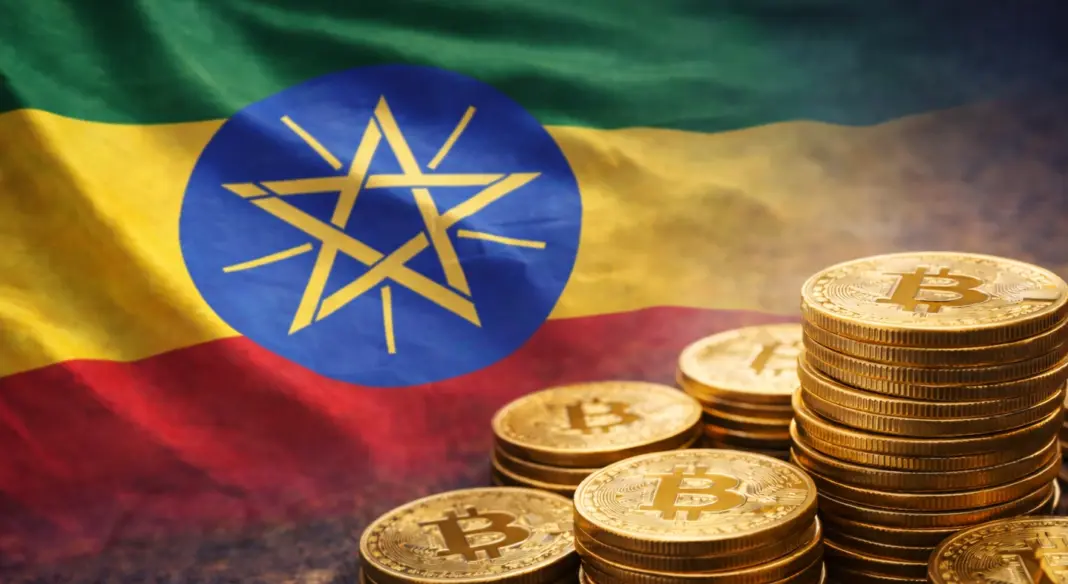

Ethiopia is gearing up for government-led Bitcoin mining. The country is seeing the mining operation as a smart way to monetize excess renewable energy rather than letting it go to waste.
Prime Minister Abiy Ahmed laid out the vision at a policy forum, framing crypto as a strategic extension of national energy and economic planning.
Stay ahead in the crypto world – follow us on X for the latest updates, insights, and trends!🚀
What the Government Actually Has in Mind When They Want to Mine Bitcoin
The plan centers on using surplus hydropower, – clean and sustainable – built up from massive projects like the Grand Ethiopian Renaissance Dam, the GERD to power mining operations directly under state control.
Instead of just licensing foreign firms, Ethiopia wants to run mining as a sovereign tool through Ethiopian Investment Holdings, capturing revenue in Bitcoin while managing grid strain.
Officials position this as modernization, and they’re exactly right. Linking cheap renewables to digital capital, boosting foreign exchange, and tying crypto to broader goals like financial inclusion and infrastructure? It’s a master plan, and it could work.
In the current phase, it’s less about speculation and more about converting idle power into globally tradable assets.
The shift comes after earlier waves of private miners strained the grid, prompting license pauses, so now the state wants to steer the ship.
How This Fits African and Energy-Rich Mining Trends From the Near Past
To put things into perspective, Ethiopia isn’t starting from scratch. Low power costs (around $0.03–0.05/kWh) already drew international operators, generating hundreds of millions in revenue for Ethiopian Electric Power, some reports peg mining at 18–20% of the utility’s income in the past years.
The country briefly ranked among top global hashrate contributors thanks to GERD’s output.
We know about similar plays elsewhere. Bhutan quietly mines with hydro surplus, El Salvador made Bitcoin legal tender and state-mined, UAE integrates mining into energy strategy.
Post-2022, when many nations banned or restricted mining over energy concerns, places with renewables pivoted to controlled adoption.
Ethiopia’s move follows that, pause the chaos, then bring it in-house for better control and value capture.
Bitcoin Mining as Energy Arbitrage for Emerging Economies
This is classic energy arbitrage on a national scale. Countries with surplus renewables (especially hydro, the cleanest of all) face the same headache, power plants run best at full capacity, but demand fluctuates.
Bitcoin mining acts like a flexible buyer, always on, location-agnostic, pays in hard currency.
It’s like how M-Pesa leapfrogged poor banking in Kenya, crypto mining leapfrogs grid export limits or idle capacity.
In emerging economies, traditional power sales leak value abroad, but mining keeps it local and liquid. It’s a win-win situation.
TradFi has long used similar tricks (e.g., pumped hydro storage for peak pricing), but Bitcoin adds global, instant settlement.
Now, experts say Ethiopia’s pivot could inspire others in Africa or Latin America with hydro/geothermal excess, turn “wasted” green energy into digital reserves without massive transmission builds.
State Mining – Imagine Reading This Five Years Ago
Mining Bitcoin could result in direct revenue in Bitcoin (hard currency hedge), grid stability (mining absorbs surplus instead of curtailment), and positioning as an early mover in sovereign crypto plays.
If executed well, it funds more energy access without foreign debt. Downside?
Energy equity is a real concern, over 50% of Ethiopians still lack reliable power, and mining guzzles kilowatts that could go to homes/farms.
But fair to say, the areas lacking power are in trouble because they’re lacking infrastructure, wires, and lines, not because Bitcoin mining is overwhelming the system.
Volatility risks state funds, and over-reliance could strain grids again if not managed.
Still, from license sales to full control isn’t trivial at all, it’s a calculated grab for more upside while fixing past pain points.
After years of private mining booms and busts, this feels like the government saying “fine, we’ll do it ourselves.”
Development Strategy or Risky Gamble?
Some might call it chasing trends or exposing public funds to crypto swings, because Bitcoin’s volatile, and state mining isn’t proven at scale.
But tying it to renewables and sovereign holdings keeps it grounded. The data will show if it pays off; it just needs some time.
The point is that Ethiopia’s state-backed mining push could turn power surplus into a real economic lever. If it works, emerging but energy-rich nations get a new playbook.
Disclosure:This article does not contain investment advice or recommendations. Every investment and trading move involves risk, and readers should conduct their own research when making a decision.
Kriptoworld.com accepts no liability for any errors in the articles or for any financial loss resulting from incorrect information.

Cryptocurrency and Web3 expert, founder of Kriptoworld
LinkedIn | X (Twitter) | More articles
With years of experience covering the blockchain space, András delivers insightful reporting on DeFi, tokenization, altcoins, and crypto regulations shaping the digital economy.
📅 Published: January 22, 2026 • 🕓 Last updated: January 22, 2026
✉️ Contact: [email protected]
