



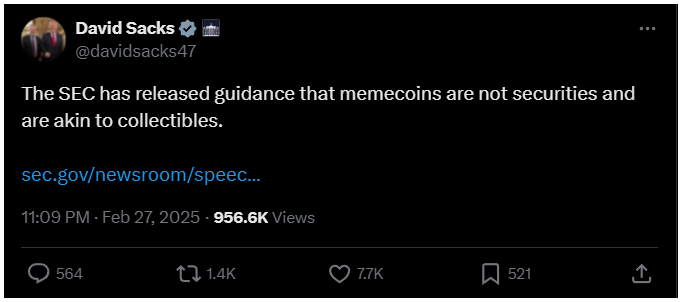
The U.S. SEC just dropped a bombshell that’s shaking up the crypto market. Memecoins like TRUMP, are officially not securities.
That means they don’t have to jump through the same hoops as stocks or bonds.
Memecoins are just for laughs?
The SEC sees memecoins more like collectibles, kind of like baseball cards or Beanie Babies, but in digital form.
Fun, but this isn’t a green light for scammers to run wild. Fraudsters, beware, the SEC is still watching.
Under the Securities Act of 1933, securities are investments tied to profits or ownership in a company. Memecoins?
They don’t fit the bill. They’re more like internet jokes people buy for kicks. So, creators and traders don’t need to register with the SEC or follow its strict rules.
Sounds great for crypto fans, but there’s a flip side. Without SEC oversight, investors are on their own if they fall victim to scams, pump-and-dump schemes, or flashy ads that overpromise and underdeliver. And, there are a lotta scams you know.
Legal experts, like Bain Capital Crypto’s Khurram Dara, chimed in to say other agencies could still crack down on shady practices.
Translation, just because the SEC is stepping back doesn’t mean memecoin creators can do whatever they want.
The MEME Act, a political plot twist
Lawmakers are cooking up their own drama. Enter the MEME Act, short for Modern Emoluments and Malfeasance Enforcement (catchy, huh?). This bill wants to stop public officials from cashing in on memecoins.
Why? Well, let’s just say Donald Trump’s TRUMP coin caused quite the hype when its value skyrocketed and then tanked faster than a bad reality TV show.
Critics worry these tokens could be used for political or personal gain, raising some serious ethical red flags.
Crypto industry reacts
The SEC’s announcement has sparked all sorts of chatter in the crypto community. Some see it as a win for innovation, saying it could encourage more investment in memecoins on U.S.-based platforms like Solana.
But here’s another twist, the SEC is dropping lawsuits against major players like Coinbase and Gemini.
Could this signal a friendlier era for crypto? Maybe, but with new laws like the MEME Act looming, it’s clear that the waters aren’t that clear yet.
Have you read it yet? Russia hits pause on digital ruble launch, and it’s getting complicated
Disclosure:This article does not contain investment advice or recommendations. Every investment and trading move involves risk, and readers should conduct their own research when making a decision.
Kriptoworld.com accepts no liability for any errors in the articles or for any financial loss resulting from incorrect information.
