

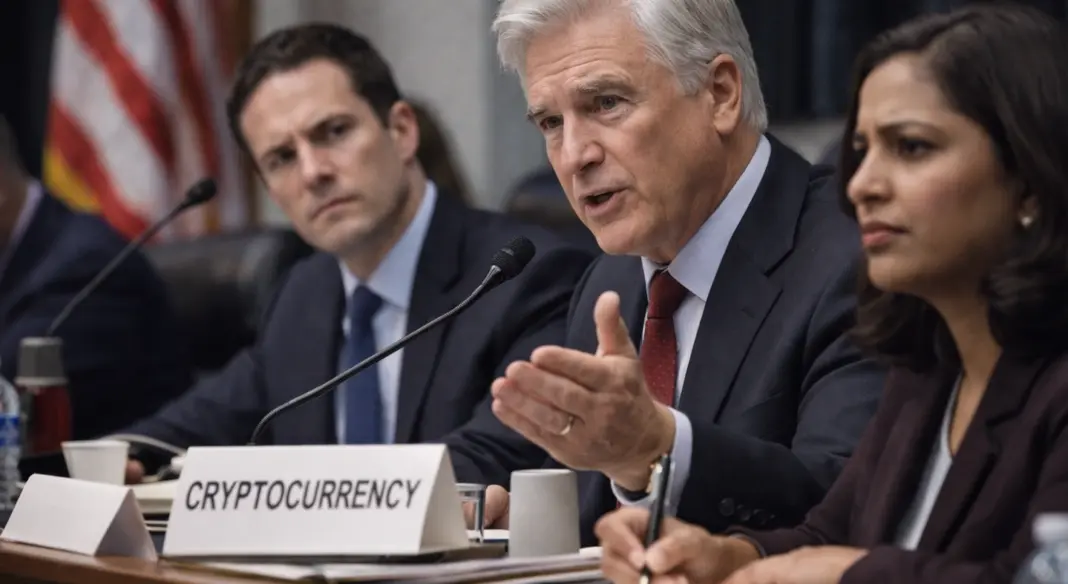

High-level political attention to crypto is starting to look normal. That is a big change from just a few years ago, when digital assets were more often treated as a fringe policy topic or a niche regulatory headache.
Now crypto is showing up around presidents, former finance chiefs, top justice officials, and wider power circles in a much more direct way.
Stay ahead in the crypto world – follow us on X for the latest updates, insights, and trends!🚀
But that does not automatically mean the industry is entering a cleaner or safer phase.
U.K. signal: former Chancellor backs bitcoin
One signal came from the U.K., where former Chancellor Kwasi Kwarteng backed bitcoin as an alternative to failing systems, while reflecting on current market turmoil and his move into bitcoin with Stack BTC.
That is not a minor cultural signal. When a former senior treasury official talks this way, it shows crypto has moved well beyond outsider status in elite policy conversation.
U.S. signal: Todd Blanche’s mixed crypto profile
The second signal came from the U.S. Department of Justice. Todd Blanche was elevated to lead the DOJ after President Donald Trump fired Attorney General Pam Bondi.
Blanche has a notably crypto profile: he pushed pro-crypto reforms such as disbanding the DOJ’s crypto-dedicated enforcement team, but as many highlighted, he also oversaw continued prosecutions of crypto software developers.
He had also disclosed sizable crypto holdings, including bitcoin and ether, before later transferring those assets to family members.
A complicated story?
That is why the bigger takeaway is more complicated than “politics likes crypto now.” The important point is that political mainstreaming brings both access and exposure.
Crypto gains more legitimacy when senior political and legal figures treat it as a serious matter. But it also becomes more tightly tied to appointments, power struggles, enforcement priorities, and changing political incentives.
More attention from the top can mean more influence, but also more instability.
Causality
Policy volatility may rise even as crypto becomes more accepted, because a friendlier speech, a pro-industry appointment, or a reform-minded memo can improve sentiment fast.
But an inconsistent enforcement decision or a politically charged prosecution can pull the mood the other way just as quickly. Blanche’s record already shows how both dynamics can exist at once.
And there are effects that are even bigger. As crypto moves deeper into mainstream politics, it gets pulled into broader battles over power, ideology, and institutional control.
That gives the industry a larger seat at the table, but it also means the table itself becomes harder to predict. Political normalization is real. But clean alignment is not.

Crypto market researcher and external contributor at Kriptoworld
Wheel. Steam engine. Bitcoin.
📅 Published: April 7, 2026 • 🕓 Last updated: April 7, 2026
✉️ Contact: [email protected]
Disclosure:This article does not contain investment advice or recommendations. Every investment and trading move involves risk, and readers should conduct their own research when making a decision.
Kriptoworld.com accepts no liability for any errors in the articles or for any financial loss resulting from incorrect information.
