

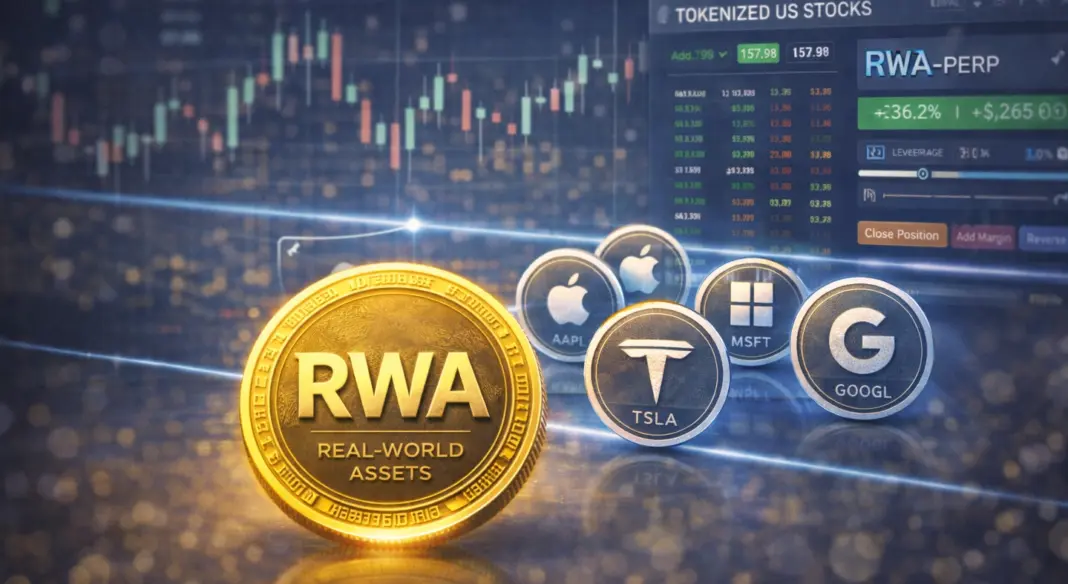

Tokenized stocks are taking shape from two directions at once. One side is pure DeFi, turning real-world assets into perpetual futures-style instruments, called “perpification” by crypto media outlets, so they trade like liquid crypto markets.
The other side is regulated finance, building tokenized stock platforms with formal approvals and major distribution partners. Together, these two layers are pushing RWAs from narrative into market plumbing.
Stay ahead in the crypto world – follow us on X for the latest updates, insights, and trends!🚀
What “perpification” actually means
Perpetual futures, or “perps,” are one of crypto’s most liquid product formats. They allow 24/7 trading, leverage, deep liquidity, and easy long/short positioning.
Perpification applies that wrapper to RWAs. Instead of waiting for a fully regulated tokenized stock market to mature, DeFi builders create synthetic exposure that trades like crypto.
It offers liquidity and price exposure in a familiar crypto structure, not the same as owning the underlying stock. That’s the point. Perps are a liquidity engine.
Ondo + Binance + Abu Dhabi: why it matters
Now look at the regulated layer. Ondo’s tokenized stocks platform gaining regulatory approval in Abu Dhabi changes the credibility equation.
Regulatory approval implies legal framework alignment, compliance visibility, and institutional comfort.
And Binance distribution adds scale. Even the best product struggles without distribution. Binance is distribution.
When tokenized stocks appear on a major global exchange, they inherit user reach, liquidity pathways, and market visibility. This is how tokenized finance leaves the lab.
How these layers reinforce each other
The two approaches solve different problems. Perpification solves liquidity and trader demand.
Regulatory approval solves legitimacy and institutional alignment. When both move forward at the same time, they reinforce adoption.
DeFi creates volume and price discovery. Regulated platforms create legal durability.
Distribution platforms connect both to users. The result is accelerated ecosystem buildout.
Consequences
Tokenized stocks are arriving as a layered market structure: synthetic liquidity wrappers (perps), regulated issuance and trading frameworks, and exchange-level distribution.
Investors should understand the difference between owning tokenized equities under regulated structures and trading synthetic RWA perps for exposure.
They carry different risks. But both are pushing in the same direction.
RWAs are moving from story to infrastructure. And tokenized stocks are becoming one of the clearest signals that the on-chain market is trying to replicate real-world financial plumbing, at crypto speed.

Cryptocurrency and Web3 expert, founder of Kriptoworld
LinkedIn | X (Twitter) | More articles
With years of experience covering the blockchain space, András delivers insightful reporting on DeFi, tokenization, altcoins, and crypto regulations shaping the digital economy.
📅 Published: March 5, 2026 • 🕓 Last updated: March 5, 2026
✉️ Contact: [email protected]
Disclosure:This article does not contain investment advice or recommendations. Every investment and trading move involves risk, and readers should conduct their own research when making a decision.
Kriptoworld.com accepts no liability for any errors in the articles or for any financial loss resulting from incorrect information.
