

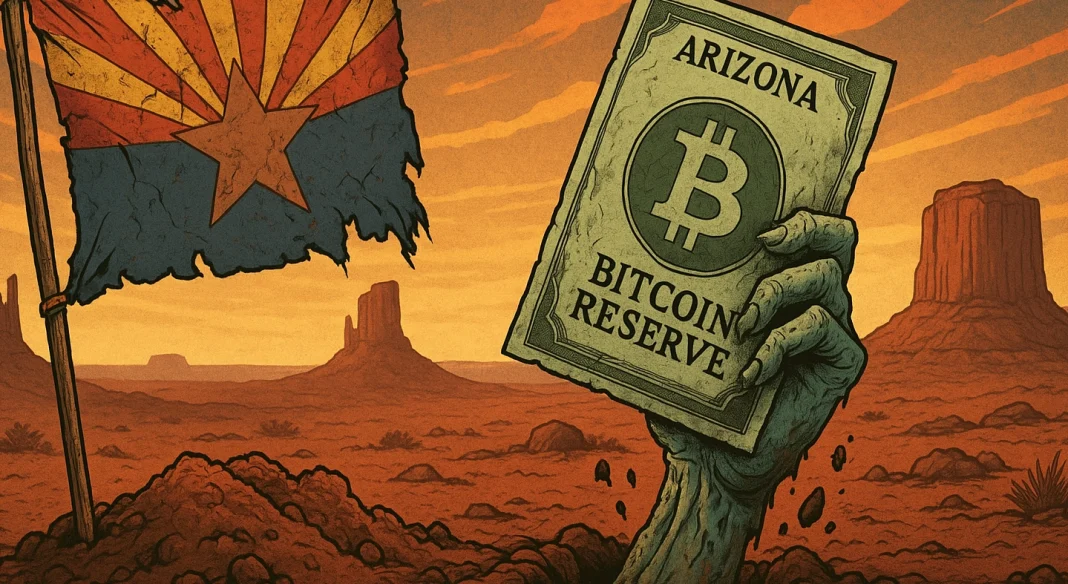

Arizona almost let this whole Bitcoin Reserve bill slip quietly into the shadows. But no, the Senate pulled a fast one, bringing it back from the dead like a plot twist in your favorite office drama.
Now, this bill, with the less creative name of House Bill 2324, is gaining serious steam, and it’s got everyone talking about what happens when the state gets its hands on seized crypto.
Veto or sign?
Earlier this year, Governor Katie Hobbs was playing it smart. She signed House Bill 2749, Arizona’s first official step to create a digital asset reserve.
Plus, she greenlit House Bill 2387, which sets consumer protection rules for those crypto ATMs popping up everywhere.
But she also vetoed some bigger, flashier proposals about investing public funds in crypto or creating a massive crypto reserve fund. She’s cautious, like the boss who knows when to hold ‘em and when to fold ‘em.
Now, here’s where it gets a little interesting. Despite those vetoes, the legislature wasn’t done.
The Senate revived House Bill 2324, a bill that had been sidelined, with a slick procedural move called a motion to reconsider. Basically, a legislative do-over.
This bill, pushed by Republican Senator Jeff Weninger, aims to set up a Bitcoin and Digital Assets Reserve Fund.
The catch? This fund would manage assets seized through criminal forfeiture, think of it as the state’s way of handling crypto loot from the bad guys.
🇺🇸 ARIZONA Update:
'Bitcoin Reserve' bill HB2324, which initially failed, has been revived after a 'motion to reconsider'.
The bill would create a fund out of digital assets seized via criminal asset forfeiture.
It passed the Senate today 16-14, and is now in the House. pic.twitter.com/FKmLr8kSmJ
— Bitcoin Laws (@Bitcoin_Laws) June 19, 2025
Money for the Anti-Racketeering Revolving Fund
So, how does this fund work? The bill lays out a clear plan, the first $300,000 from selling seized crypto goes straight to Arizona’s Anti-Racketeering Revolving Fund. Any cash beyond that?
Half keeps fueling anti-racketeering efforts, while the other half splits evenly between the state’s General Fund and the new Bitcoin and Digital Assets Reserve Fund. Everyone gets their cut.
The Senate barely squeaked this one through with a 16-14 vote, mostly party-line stuff. Funny thing? Some senators who initially opposed the bill, like Janae Shamp, flipped the script and helped bring it back for another vote.
Now it’s up to the House, where the Republican majority holds the key to sending this bill to the governor’s desk.
Comeback?
Arizona wouldn’t be the first to do this. New Hampshire already passed a similar Bitcoin reserve law, and Texas is on board too.
Other states, like Illinois, Kentucky, Utah, Maryland, and more are watching closely, considering their own moves.
The crypto policy game is clearly heating up nationwide, and Arizona’s comeback could be the spark that sets off a wave of new laws.
Disclosure:This article does not contain investment advice or recommendations. Every investment and trading move involves risk, and readers should conduct their own research when making a decision.
Kriptoworld.com accepts no liability for any errors in the articles or for any financial loss resulting from incorrect information.
