

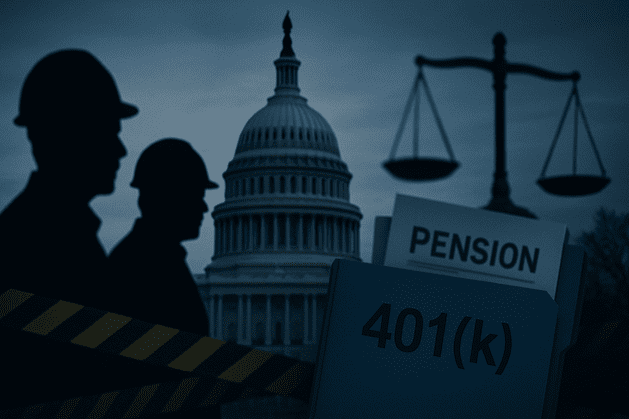

The AFL-CIO criticized the Senate crypto bill, the Responsible Financial Innovation Act (RFIA), for lacking worker protections. In a letter, the AFL-CIO urged the Senate Banking Committee to reject the RFIA draft.
The union said the Senate crypto bill threatens retirement funds. It argued that 401(k)s and pensions could face higher volatility and loss. According to the AFL-CIO, the RFIA would expand crypto’s role without sufficient oversight or meaningful safeguards.
The AFL-CIO also raised financial stability concerns. It warned that the Deposit Insurance Fund could face greater risk if banks custody crypto. The union added that the RFIA weakens SEC oversight by codifying tokenization of securities. It said the Senate crypto bill could enable “shadow public stock” outside standard disclosure rules.
Senators Cynthia Lummis and Kirsten Gillibrand first introduced the RFIA in 2022. They revised the Senate crypto bill this year. The Senate Banking Committee is developing the RFIA as an alternative to a House market structure bill. The AFL-CIO maintains that the RFIA provides the facade of regulation rather than real worker protections.
Jody Calemine, the AFL-CIO policy director, summarized the union’s position. He said the RFIA’s approach to crypto assets exposes retirement funds to undue risk. He added that allowing broader bank crypto activity could endanger financial stability. Therefore, the AFL-CIO asked senators to oppose the Senate crypto bill in its current form.
The AFL-CIO compared the risks to conditions before the 2008 financial crisis. It cited high-risk activities and weak guardrails. It said similar dynamics could emerge if the RFIA becomes law without stronger worker protections.
The Senate crypto bill remains a discussion draft. The Senate Banking Committee has not formally introduced the RFIA. The AFL-CIO continues to press for stronger SEC oversight and clearer safeguards. It wants explicit limits on tokenization of securities that bypass public markets. It also seeks protections for retirement funds, including 401(k)s and pensions, to preserve financial stability.
Disclosure:This article does not contain investment advice or recommendations. Every investment and trading move involves risk, and readers should conduct their own research when making a decision.
Kriptoworld.com accepts no liability for any errors in the articles or for any financial loss resulting from incorrect information.

Tatevik Avetisyan is an editor at Kriptoworld who covers emerging crypto trends, blockchain innovation, and altcoin developments. She is passionate about breaking down complex stories for a global audience and making digital finance more accessible.
📅 Published: October 8, 2025 • 🕓 Last updated: October 8, 2025
