

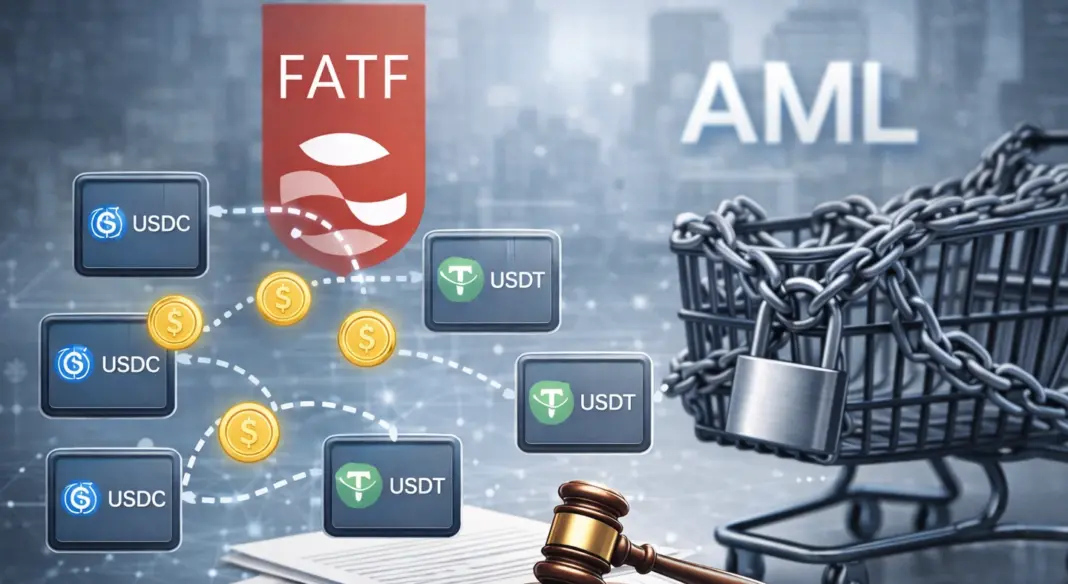

People love to argue about “stablecoins are good” or “stablecoins are bad.” FATF is talking about something more specific, and more annoying for everyday users. The AML rules.
They’re pointing at peer-to-peer stablecoin transfers as a top money laundering risk.
Stay ahead in the crypto world – follow us on X for the latest updates, insights, and trends!🚀
That’s the kind of sentence that sounds abstract… until your app gets slower, your transfer gets flagged, or a platform suddenly asks you for more paperwork.
What FATF is actually worried about
Think about a simple flow: you buy USDT or USDC, then send it to a friend, a freelancer, or a second wallet you control. No bank wire.
No card chargeback. It settles fast, globally, any time of day. That speed is the feature. It’s also the problem.
FATF’s view is that P2P stablecoin transfers sit in the hardest-to-monitor layer.
Funds move quickly, often across borders, and sometimes outside “hosted” platforms where KYC checks happen.
Why this pain hits stablecoins first
Bitcoin moves too, sure. The weird part is stablecoins behave like digital cash with a price tag that stays flat.
That makes them perfect for payments, remittances, and also for laundering. So when regulators want “practical controls,” they often start here.
And stablecoin issuers can help enforce controls in a way other crypto assets can’t. In practice that can include freezing addresses, blocking routes, and leaning on transaction monitoring.
What you might actually notice as a user
If this pressure turns into enforcement, you’ll likely feel it through “soft friction.”
Examples that tend to show up first: lower wallet-level limits for P2P transfers, extra KYC steps before withdrawals, certain address “routes” blocked or delayed, and slower deposits and withdrawals when risk flags trigger.
None of this targets “crypto culture.” It targets the part of the system that moves value the fastest with the least built-in identity checks.
Sounds bad. But if you think about it, it’s not that bad after all. For context, stress can escalate fast when crime and threats show up.
Better rules can mean a cleaner playing field
Still, the short-term bill often lands on retail first, in the form of friction.
If you use stablecoins for everyday transfers, stablecoin AML will show up as product changes, not stay a policy debate.

Crypto market researcher and external contributor at Kriptoworld
Wheel. Steam engine. Bitcoin.
📅 Published: March 6, 2026 • 🕓 Last updated: March 6, 2026
✉️ Contact: [email protected]
Disclosure:This article does not contain investment advice or recommendations. Every investment and trading move involves risk, and readers should conduct their own research when making a decision.
Kriptoworld.com accepts no liability for any errors in the articles or for any financial loss resulting from incorrect information.
