

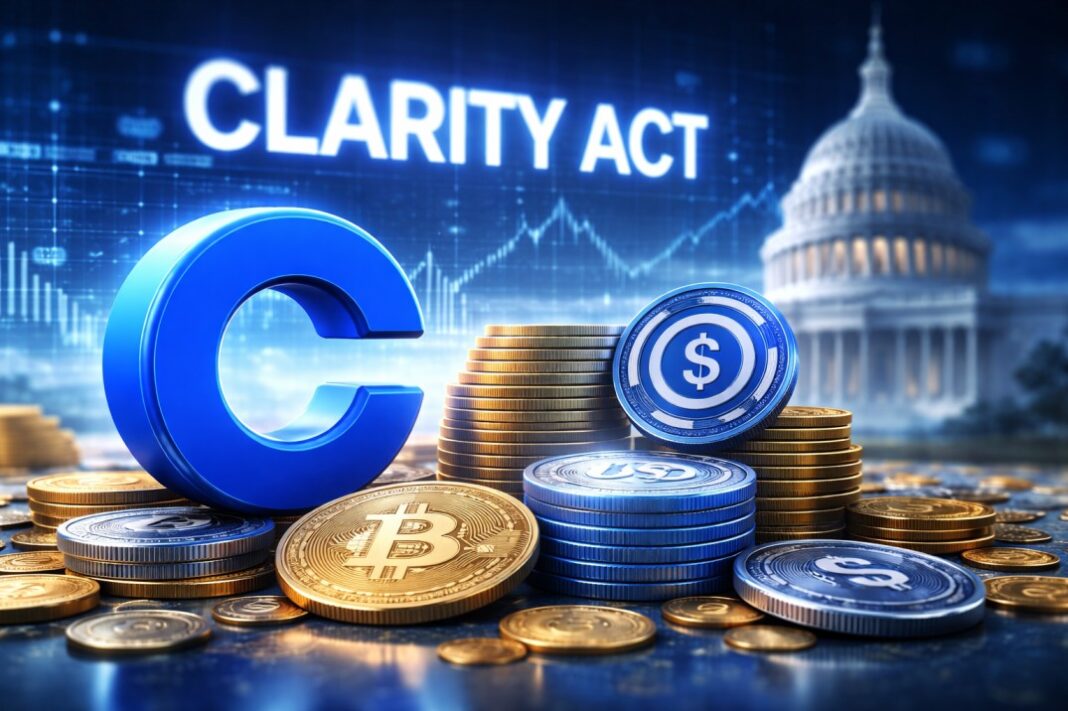

Coinbase is increasing pressure on US lawmakers as debate grows over a stablecoin rewards ban tied to the CLARITY Act.
A Bloomberg report on Sunday cited “a person familiar with the firm’s thinking” and said Coinbase “may reconsider its support” for the CLARITY Act if lawmakers restrict stablecoin rewards offered through crypto exchanges and similar platforms.
CLARITY Act Stablecoin Rewards Ban Triggers Banking Pushback
Banking groups have argued that a stablecoin rewards ban is needed to protect bank deposits. They have warned that rewards products could pull large sums from traditional accounts.
These groups have focused on stablecoin rewards that users receive through exchanges. They say the structure can look like yield and can compete with bank savings.
The report also described political messaging aimed at the bill. It said an anti decentralized finance group ran ads on Fox News and urged viewers to pressure senators about CLARITY Act provisions.
Stay ahead in the crypto world – follow us on X for the latest updates, insights, and trends!🚀
Senate Banking Committee Markup Targets Stablecoin Rewards Structure
The next flashpoint is a Senate Banking Committee markup session scheduled for Thursday, the report said. Lawmakers are expected to debate how the CLARITY Act treats stablecoin rewards.
The dispute connects to the GENIUS Act, which passed in July. The GENIUS Act prohibits stablecoin issuers from offering interest or yield to token holders.
However, the GENIUS Act does not clearly extend that ban to exchanges or third parties. As a result, issuers could still support stablecoin rewards through partner platforms, according to the report.
Coinbase Stablecoin Revenue and USDC Rewards Sit at the Center
For Coinbase, the policy fight ties to stablecoin income. The exchange reported nearly $247 million in stablecoin revenue in Q4, plus $154.8 million from blockchain rewards.
A ban could also affect products tied to USDC rewards. The report referenced Circle’s USDC and said users can earn around 3.5% through related reward programs.
Coinbase has applied for a national trust bank charter, the report said. That charter could support how Coinbase offers rewards under current rules, while banking advocates push for the CLARITY Act to close the gap.
The report added a systemwide estimate from the US Treasury Department. In April, Treasury estimated that widespread stablecoin adoption could draw about $6.6 trillion from the traditional banking system.
On the crypto advocacy side, Stand With Crypto said supporters sent more than 135,000 emails to senators to protect stablecoin rewards.

The timeline remains a separate concern. TD Cowen’s Washington Research Group warned that the 2026 midterm elections could slow the CLARITY Act, with passage possibly slipping to 2027 and implementation to 2029.
Still, Tim Scott, the Senate Banking Committee chair, signaled faster aims. He said the bill can move sooner and “deliver real results for the American people.”
Disclosure:This article does not contain investment advice or recommendations. Every investment and trading move involves risk, and readers should conduct their own research when making a decision.
Kriptoworld.com accepts no liability for any errors in the articles or for any financial loss resulting from incorrect information.

Tatevik Avetisyan is an editor at Kriptoworld who covers emerging crypto trends, blockchain innovation, and altcoin developments. She is passionate about breaking down complex stories for a global audience and making digital finance more accessible.
📅 Published: January 12, 2026 • 🕓 Last updated: January 12, 2026
