

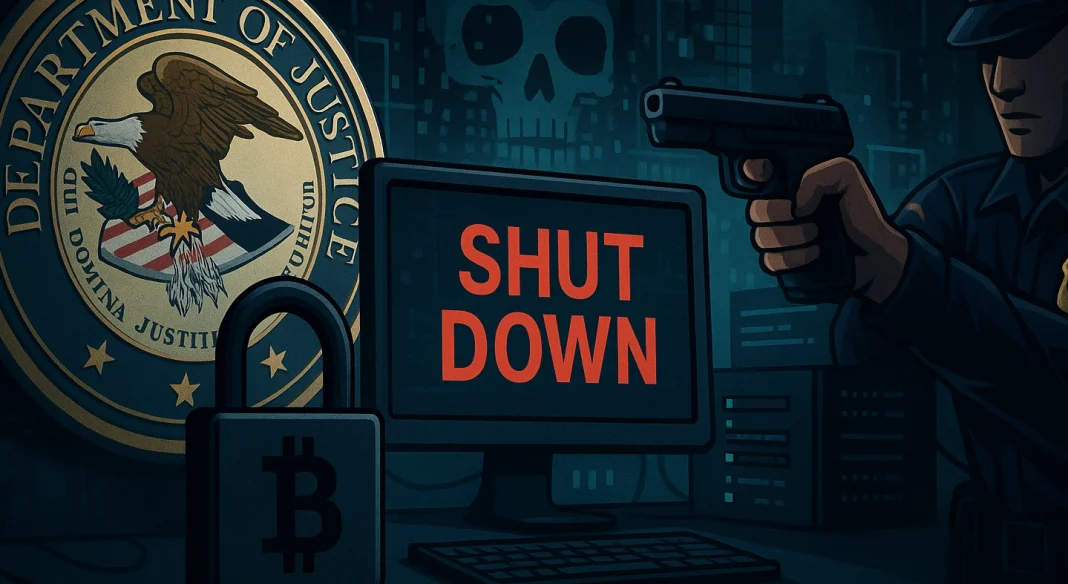

The U.S. Department of Justice just pulled the plug on a nasty cybercrime operation that’s been snatching millions of crypto wallets and login credentials like candy from a baby.
They seized five key domains tied to LummaC2, a malware-as-a-service tool that’s been wreaking havoc on unsuspecting victims’ digital lives.
Targets
What’s LummaC2, you ask? It’s like the mob boss of malware, offered to cybercriminals who want to steal all kinds of personal info, like login credentials, browser data, autofill details, and the crown jewels, cryptocurrency seed phrases.
These seed phrases? They’re the keys to the kingdom, giving thieves full access to your virtual wallets.
The FBI found at least 1.7 million cases where this malware was used to swipe sensitive data.
The DOJ’s Criminal Division head, Matthew R. Galeotti, didn’t mince words, and told they’re enough.
“Malware like LummaC2 is deployed to steal sensitive information such as user login credentials from millions of victims in order to facilitate a host of crimes, including fraudulent bank transfers and cryptocurrency theft.”
Translation? These crooks have been robbing people blind, and the feds just shut down their main hideouts.
Strike back
These five seized domains were the control centers, the user panels, where the bad guys managed infections and sifted through stolen data.
Now, if you try to visit those sites, you’ll be greeted with a big federal seizure notice. That’s right, the house always wins.
And the crackdown doesn’t stop there. Microsoft jumped into the ring, filing a civil suit to disrupt another 2,300 domains linked to the same gang or their affiliates. This is a full-scale takedown.
Dead or alive?
To sweeten the deal, the U.S. State Department’s Rewards for Justice program is dangling up to $10 million for anyone who can spill the beans on foreign state-backed cybercriminals targeting America’s critical infrastructure, including crypto-related attacks.
That’s a serious bounty, but of course, the info is serious too.
So, if you’re dabbling in crypto, keep your guard up. The bad guys are clever, but the feds and tech giants? They’re coming for them hard.
Disclosure:This article does not contain investment advice or recommendations. Every investment and trading move involves risk, and readers should conduct their own research when making a decision.
Kriptoworld.com accepts no liability for any errors in the articles or for any financial loss resulting from incorrect information.
