

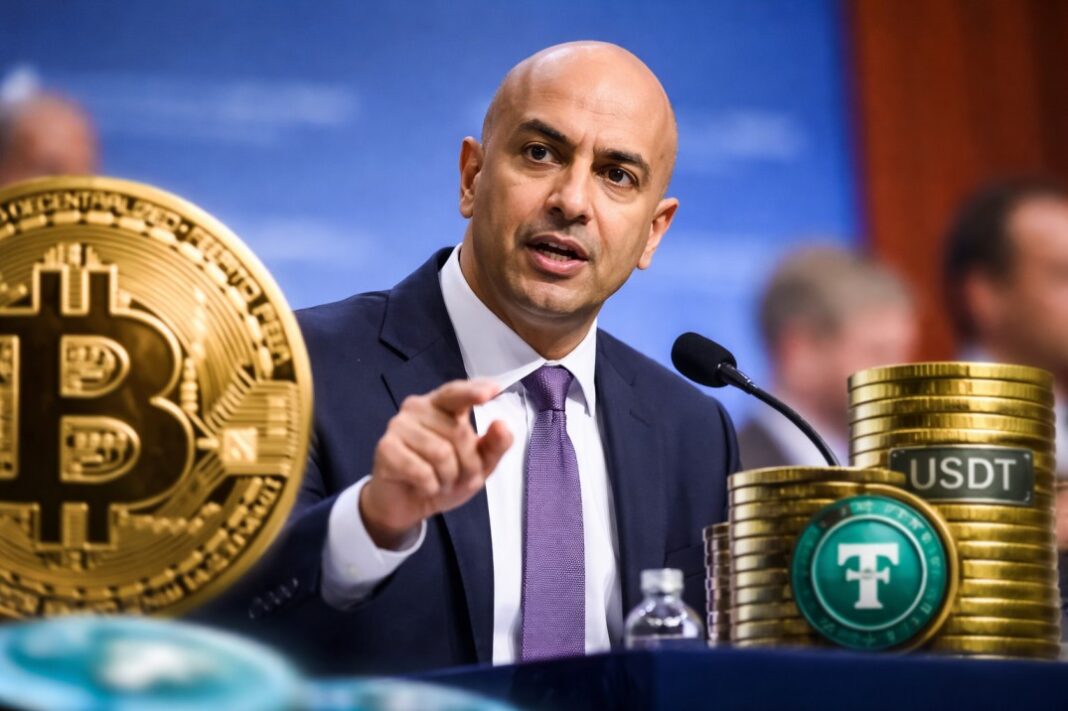

Neel Kashkari, president of the Federal Reserve Bank of Minneapolis, criticized crypto and stablecoins during remarks at the 2026 Midwest Economic Outlook Summit on Thursday.
He also praised AI, saying it shows real use in daily life.
Stay ahead in the crypto world – follow us on X for the latest updates, insights, and trends!🚀
Kashkari said crypto “has been around for more than a decade, and it’s utterly useless.”
He framed the comment as a contrast with AI, which he described as widely used despite being newer.
He also challenged stablecoins, saying many industry explanations sound like “a buzzword salad.” Kashkari told listeners to ask basic questions and avoid vague answers.
Neel Kashkari says AI use beats crypto use
Kashkari compared AI adoption with crypto adoption. He said AI “has not been around very long, and people are using it every day.”
Then he connected that point to economic value. “This is demonstrating to me that this thing is real and it has real long-term potential for the US economy as opposed to crypto,” Kashkari said.
Kashkari returned to the same theme of usefulness. He said crypto has existed for over a decade, yet he still sees little daily value.
Kashkari challenges stablecoins with Venmo, PayPal, and Zelle
Kashkari said the stablecoin pitch often relies on unclear terms. He said the way the crypto industry frames stablecoins is “a buzzword salad.”
He described a question he asks supporters of stablecoins.
“I always ask people: What can I do with the stablecoin that I can’t do with Venmo today?”
Kashkari said.
He used a simple payment example.
“I could send any one of you $5 with Venmo, or PayPal, or Zelle, so what is it that this magical stablecoin can do?”
he said. Kashkari added that he often hears “blah blah blah, tokenized deposits.”
Stablecoin remittances draw Kashkari’s fee and currency point
Kashkari also focused on stablecoin remittances. He said the remittance argument mainly targets people outside the US, and he questioned how cheap it is in practice.
He gave an example involving his father-in-law in the Philippines. Kashkari said the person could receive stablecoins quickly, but still needs to convert them into local currency to spend them.
Kashkari tied that friction to monetary policy.
“If everybody in the world uses the same currency or the same payment platform. All these frictions go away,”
he said. However, he argued other countries “are not going to abandon their own monetary policy [for stablecoins].”
Kashkari ended with a broader message aimed at the crypto and stablecoin debate.
“When it comes to anything about crypto or stablecoins, ask the most basic questions and don’t settle for word salad nonsense answers,”
he said.
Disclosure:This article does not contain investment advice or recommendations. Every investment and trading move involves risk, and readers should conduct their own research when making a decision.
Kriptoworld.com accepts no liability for any errors in the articles or for any financial loss resulting from incorrect information.

Tatevik Avetisyan is an editor at Kriptoworld who covers emerging crypto trends, blockchain innovation, and altcoin developments. She is passionate about breaking down complex stories for a global audience and making digital finance more accessible.
📅 Published: February 20, 2026 • 🕓 Last updated: February 20, 2026
