

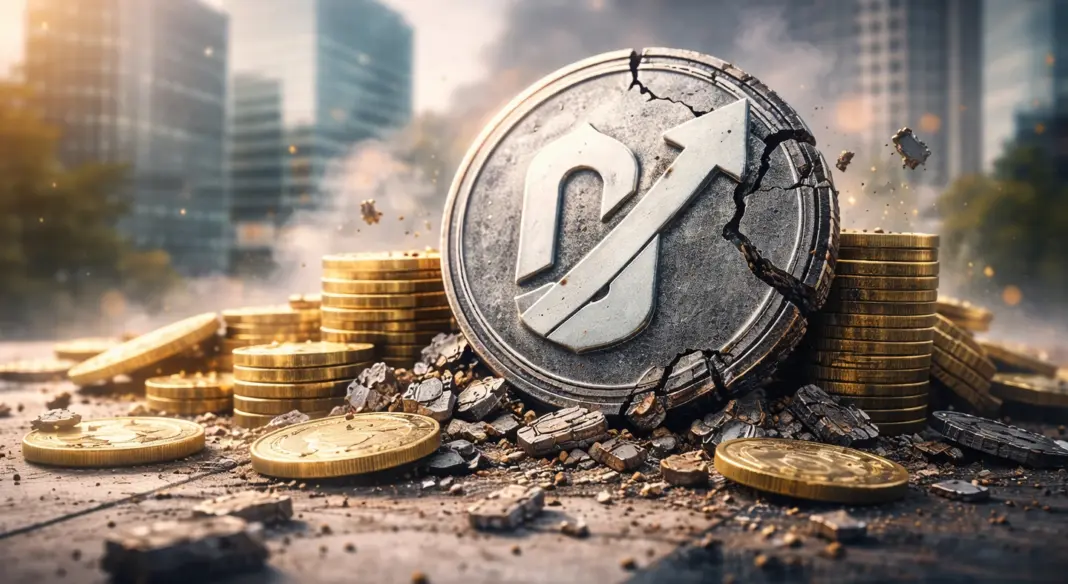

Corporate crypto is starting to look like a two-speed market. Mercado Libre is shutting down a loyalty token that lasted just under four years and never found lasting product-market fit beyond cashback rewards.
And OpenEden, a tokenized real-world asset platform, is voluntarily extending its team lockup by nine months despite the token sitting 97% below its peak. Same broad category, completely different logic.
Stay ahead in the crypto world – follow us on X for the latest updates, insights, and trends!🚀
Mercado Coin: engagement tool, not ecosystem
Mercado Libre, Latin America’s dominant e-commerce and fintech platform with over 80 million registered users in Brazil alone, launched Mercado Coin in August 2022 as an ERC-20 token on Ethereum with an initial value of $0.10, positioning it as a loyalty and cashback tool designed to deepen engagement within the Mercado Pago wallet ecosystem.
On March 31, the company sent notifications through Mercado Pago informing users that the token will be fully phased out on April 17, after which buying, selling, and earning cashback in Mercado Coin will no longer be possible, and any remaining balances will be automatically converted to local currency.
Mercado Libre has not provided a public explanation for the decision, but the pattern is familiar enough to read without one.
Attaching a branded token to a loyalty program does not automatically create sustained user behavior or genuine secondary-market demand.
Sometimes it just creates a slightly more complicated version of a points scheme, exposed to crypto volatility and regulatory scrutiny without the traditional points program’s operational simplicity.
The token never expanded meaningfully beyond Brazil, and the most honest summary of the exit is that the engagement logic it was designed to support simply did not hold up over time.
What makes the shutdown strategically interesting is what Mercado Libre is doing instead.
The company still holds over $38 million in Bitcoin on its corporate balance sheet and continues to offer Meli Dolar, its USD-backed stablecoin launched in 2024 for everyday transactions and peer-to-peer payments, through the Mercado Pago app.
So the message is not “we are leaving crypto.” It is “we are keeping the functional products and removing the one that was really just a promotional layer dressed up as a digital asset.”
OpenEden: voluntary lockup as credibility architecture
OpenEden, a Singapore-based tokenized finance platform whose products include a tokenized U.S. Treasury bill fund, the USDO stablecoin, and a structured institutional RWA stack, announced that all team and adviser tokens will remain locked for an additional nine months beyond the original vesting schedule.
Today, we announce that all team and advisor tokens will remain locked for an additional 9 months, with the overall vesting period extended by the same duration.
As a result, no team or advisor tokens will begin vesting until January 2027.
Over the past year, we have… pic.twitter.com/cQALXWPZDY
— OpenEden (@OpenEden_X) March 31, 2026
Meaning no insider vesting can begin until at least January 2027, regardless of what EDEN trades at in the interim.
The project described the decision as a “collective decision” reflecting a commitment to “scaling from a position of strength and long-term alignment.”
The context makes the move notable. EDEN is currently trading approximately 97% below its lifetime peak, and a standard token schedule would have already created unlock windows that insiders could begin to use.
Instead, the team elected to extend voluntarily, which eliminates, for the moment, one of the most persistent fears in early-stage token markets: that insiders will exit at the first opportunity regardless of what happens to the project and everyone who bought in after them.
The lockup extension does not fix the token’s price, and it does not guarantee that the institutional product strategy succeeds. But it does make the argument that the team’s financial interests are still tied to a January 2027 and beyond outcome.
That is a meaningfully different posture than the one that characterizes most distressed token situations.
The lockup also fits inside a broader credibility architecture OpenEden has been building around institutional legitimacy. Its tokenized T-bill fund, USDO stablecoin, and institutional partnerships are not retail speculation products.
All are regulated instruments designed to attract capital from the kind of investors who read vesting schedules carefully and treat insider behavior as a due-diligence signal.
In that context, voluntarily extending a lockup at a 97% drawdown is a message to the specific audience that OpenEden is trying to reach.
What the split actually means
These two stories sit at opposite ends of what corporate crypto can mean in practice.
Mercado Coin was a promotional layer given a crypto wrapper, a product designed to solve a loyalty problem, not a financial infrastructure problem, and discontinued when the loyalty logic weakened.
OpenEden’s EDEN is part of a financial infrastructure product strategy that requires institutional trust to function, and the lockup extension is an explicit attempt to build that trust even at the cost of short-term optionality for the team.
For investors tracking the corporate token space, the real shift may be simpler than it sounds. The market is becoming less impressed by the existence of a token launch and more focused on the structure of commitment behind it.
Governance discipline, insider alignment, use-case durability, and whether the underlying product can survive a bear market without the founding team heading for the exit. That is the name of the game now.
In corporate crypto, durability is starting to matter more than novelty. The two-speed market is just making that more visible than it used to be.

Cryptocurrency and Web3 expert, founder of Kriptoworld
LinkedIn | X (Twitter) | More articles
With years of experience covering the blockchain space, András delivers insightful reporting on DeFi, tokenization, altcoins, and crypto regulations shaping the digital economy.
📅 Published: April 3, 2026 • 🕓 Last updated: April 3, 2026
✉️ Contact: [email protected]
Disclosure:This article does not contain investment advice or recommendations. Every investment and trading move involves risk, and readers should conduct their own research when making a decision.
Kriptoworld.com accepts no liability for any errors in the articles or for any financial loss resulting from incorrect information.
