

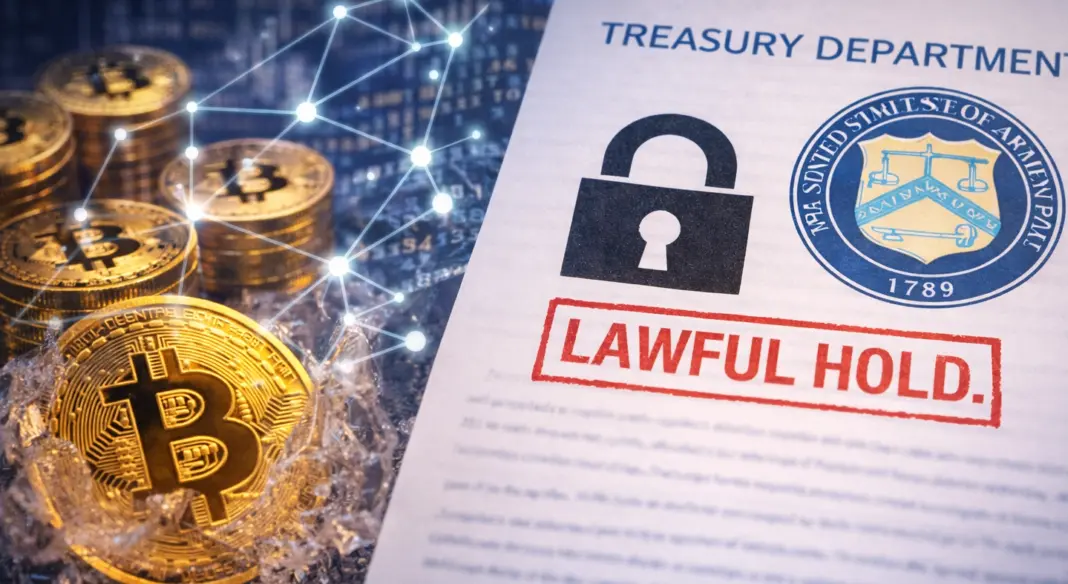

U.S. Treasury delivered a message that sounds contradictory at first. Mixers can have legitimate privacy uses. But platforms should also be able to hold or freeze suspicious crypto flows, by law.
Put together, those ideas point to a shift in how crypto privacy law is being framed.
The conversation is moving away from ideological debates about privacy and toward the practical question regulators care about most: enforceability.
Stay ahead in the crypto world – follow us on X for the latest updates, insights, and trends!🚀
Why Treasury acknowledged legitimate privacy tools
Crypto mixers are tools designed to obscure the link between sender and receiver on public blockchains.
They are often associated with illicit finance because they can make transaction tracing more difficult. At the same time, they also serve an ordinary privacy function.
Public blockchains expose transaction histories and wallet balances.
For businesses, that transparency can reveal operational information, but for individuals, it can expose financial activity to anyone willing to analyze the chain.
Acknowledging valid privacy use signals that regulators are not automatically equating privacy with criminal activity. That nuance matters, but it comes paired with another regulatory objective.
What a “hold law” would do
The Treasury also recommended that crypto platforms be required to implement the ability to hold suspicious funds.
In practical terms, a hold law would give exchanges and platforms the legal obligation to delay or freeze certain transactions when risk signals appear.
Instead of funds moving instantly through the system, the platform could pause the transfer long enough for compliance checks, reporting, or law-enforcement requests.
The emphasis is on the word “hold.” This approach shifts enforcement earlier in the transaction process rather than relying entirely on investigations after funds have already moved.
Why regulators want a holding mechanism
Crypto settlement is fast and global. Once assets move through an exchange or wallet, they can quickly pass through bridges, swaps, and additional transfers before any authority has time to react. A holding mechanism changes that dynamic.
It creates a window where suspicious activity can be reviewed, compliance teams can assess risk flags, and enforcement agencies can intervene before funds disappear into complex transaction chains.
From a regulatory perspective, the goal is straightforward: introduce enough friction to make enforcement possible.
Platforms become part of the control layer
A hold framework would also change the role of crypto platforms. Instead of only monitoring activity, exchanges and service providers would be required to act when risk indicators appear.
That can involve automated monitoring systems, risk scoring models, withdrawal delays, and reporting pipelines that feed information to regulators.
In this structure, privacy and enforcement become two sides of the same infrastructure, so privacy tools can exist, but platforms must maintain the ability to interrupt suspicious activity.
How this may appear in everyday crypto use
Changes to crypto privacy law rarely arrive as dramatic bans. More often they appear as small operational adjustments.
Transfers might be delayed for review. Withdrawals may require additional checks.
Platforms may ask for stronger identity verification or source-of-funds explanations when certain transaction patterns appear.
Privacy tools may receive closer scrutiny inside compliance systems. The experience of using crypto remains possible, but the system introduces additional checkpoints.
The Treasury’s message can be summarized simply. Privacy has legitimate uses. Unstoppable financial flows do not.
The proposed hold law moves crypto regulation toward mechanisms that allow platforms to pause suspicious transactions before they leave the system.
That approach attempts to preserve privacy features while ensuring that enforcement remains possible when risk signals appear.

Cryptocurrency and Web3 expert, founder of Kriptoworld
LinkedIn | X (Twitter) | More articles
With years of experience covering the blockchain space, András delivers insightful reporting on DeFi, tokenization, altcoins, and crypto regulations shaping the digital economy.
📅 Published: March 10, 2026 • 🕓 Last updated: March 10, 2026
✉️ Contact: [email protected]
Disclosure:This article does not contain investment advice or recommendations. Every investment and trading move involves risk, and readers should conduct their own research when making a decision.
Kriptoworld.com accepts no liability for any errors in the articles or for any financial loss resulting from incorrect information.
