

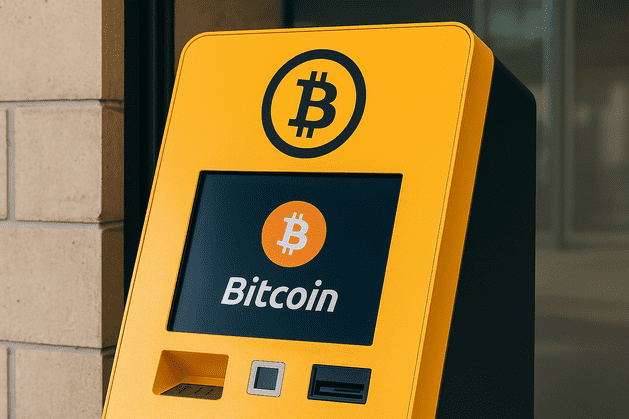

Wisconsin senators have filed Senate Bill 386 to regulate crypto ATMs and prevent scams.
The proposal mirrors Assembly Bill 384, introduced on July 31 by Representative Ryan Spaude. Senator Kelda Roys and six other Democratic representatives submitted the Senate version on August 11.
Both bills require crypto ATM operators to obtain a money transmitting license. Operators must collect user information, including name, date of birth, address, phone number, and email.
By introducing identical bills in both the Senate and Assembly, lawmakers can review them at the same time, which may speed up the process.
Stay ahead in the crypto world – follow us on X for the latest updates, insights, and trends!🚀
ID Verification Rules for Crypto ATM Users
Under the bills, crypto ATM operators must collect a government-issued ID such as a passport or driver’s license. They must also take a photo of the customer during the transaction.
The proposed rules require identity verification for every transaction. Customers would be limited to $1,000 in daily transactions through any crypto ATM.
Fraud warnings would need to be placed on the front of each machine, positioned “within the customer’s field of vision.”
Fee Limits and Refund Obligations for Crypto ATM Operators
The bills set a fee cap for crypto ATM transactions. Operators could charge a maximum flat $5 fee or 3% of the transaction amount, whichever is higher.
If a fraudulent transaction occurs, crypto ATM operators must fully reimburse the customer. This applies when law enforcement confirms fraud within 30 days.
The reimbursement rule also applies when an ATM sends funds to a scammer.
FinCEN Warns Financial Institutions on Crypto ATM Fraud
On August 4, the U.S. Treasury’s Financial Crimes Enforcement Network (FinCEN) issued a notice instructing financial institutions to report suspicious crypto ATM transactions.
“Criminals are relentless in their efforts to steal money from victims, and they’ve learned to exploit innovative technologies like CVC kiosks,”
said FinCEN Director Andrea Gacki.
FinCEN listed fraud, cybercrime, and drug trafficking as the most common crimes involving crypto ATMs.
The agency also warned that elderly people are frequent victims, often targeted by scammers posing as bank employees, tech support, or customer service staff.
International Actions Against Crypto ATMs
Countries worldwide are tightening regulations on crypto ATMs. On July 17, New Zealand banned all crypto ATMs, citing concerns about money laundering and criminal financing.
In the United Kingdom, authorities seized seven crypto ATMs in southwest London and arrested two individuals in July for suspected money laundering and operating an illegal exchange.
In the United States, Grosse Pointe Farms, Michigan, passed rules on crypto ATMs despite not having any machines in operation.
Disclosure:This article does not contain investment advice or recommendations. Every investment and trading move involves risk, and readers should conduct their own research when making a decision.
Kriptoworld.com accepts no liability for any errors in the articles or for any financial loss resulting from incorrect information.

Tatevik Avetisyan is an editor at Kriptoworld who covers emerging crypto trends, blockchain innovation, and altcoin developments. She is passionate about breaking down complex stories for a global audience and making digital finance more accessible.
📅 Published: August 13, 2025 • 🕓 Last updated: August 13, 2025
