

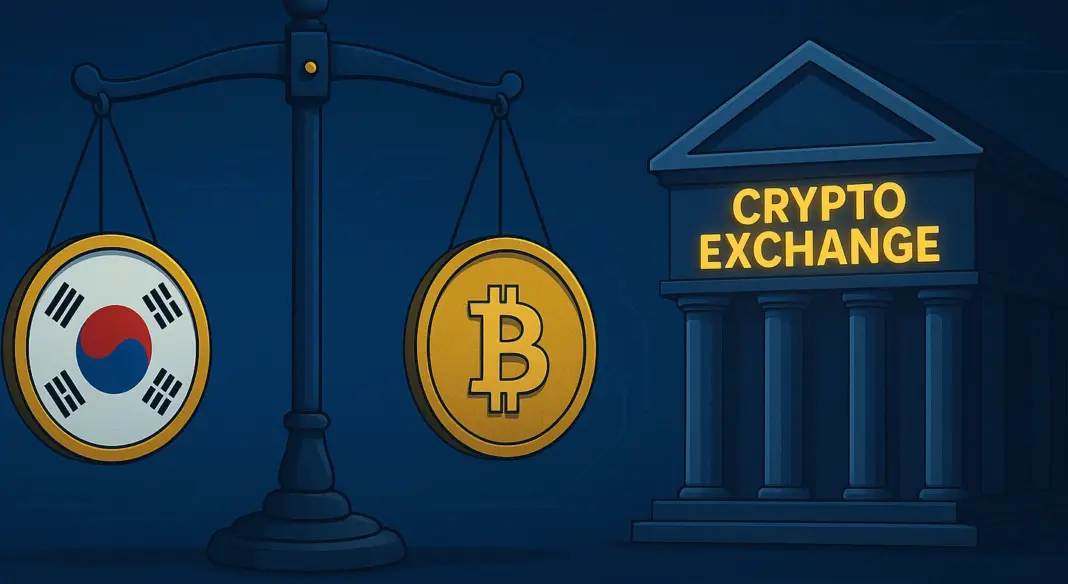

South Korea’s new crypto crackdown looks like the financial equivalent of sending your rebellious kid to military school.
Crypto exchanges are about to learn some serious discipline after Upbit’s $30 million hacking fiasco threw a wrench in the system.
Stay ahead in the crypto world – follow us on X for the latest updates, insights, and trends!🚀
You break it, you buy it
Last month, Upbit, one of South Korea’s heavyweight crypto exchanges, suffered a pretty big breach.
Over 104 billion Solana tokens, amounting to roughly $36 million, vanished into thin air, or at least into some hacker’s digital wallet, in just under an hour.
Now, this kind of digital mugging wouldn’t be so shocking in the crypto market, but under current laws, Upbit wasn’t forced to foot the bill for any of those losses.
That’s about as comforting as handing the keys of your house to a raccoon and hoping for the best.
Cue South Korea’s Financial Services Commission, the FSC stepping into the scene, looking like the strict parent who’s had enough.
They’re proposing reforms to treat crypto exchanges a lot more like banks, saddling them with “bank-level liability.”
Translation, if a hack or system failure happens, exchanges must pay the victims, no excuses.
Think of it as crypto exchanges finally getting the “you break it, you buy it” rule.
Politicians smelled something fishy
The regulators aren’t just cherry-picking this one incident but responding to a disturbing pattern.
As industry observers warned, South Korea’s top five crypto exchanges, including Upbit, racked up 20 system meltdowns this year alone.
These failures cost users a cool 5 billion won in losses. So not suprisingly, the new draft law goes hard, exchanges will need to beef up their IT security, meet tougher system standards, and face steeper fines.
The proposed penalty cap? A spicy 3 percent of annual revenue, blowing past the old 5 billion won limit. For a crypto giant, that’s a serious spanking.
Things got more suspicious after the Upbit hack when they dawdled for over six hours before telling regulators, a delay conveniently timed around their merger with Naver Financial.
Politicians smelled something fishy and accused the exchange of playing cover-up games.
Expanding anti-money laundering rules to cover even transactions under 1 million won
South Korea’s also cracking down on money laundering.
Their Financial Intelligence Unit is gearing up to slap hefty fines and freeze accounts faster than you can say “crypto noir,” expanding anti-money laundering rules to cover even tiny transactions under 1 million won.
No more sneaky splitting of transfers to dodge detection. Also, shady with shady pasts in tax or drug crimes?
Forget major ownership in licensed crypto platforms. Korea is aiming for a squeaky clean industry.
Disclosure:This article does not contain investment advice or recommendations. Every investment and trading move involves risk, and readers should conduct their own research when making a decision.
Kriptoworld.com accepts no liability for any errors in the articles or for any financial loss resulting from incorrect information.

Cryptocurrency and Web3 expert, founder of Kriptoworld
LinkedIn | X (Twitter) | More articles
With years of experience covering the blockchain space, András delivers insightful reporting on DeFi, tokenization, altcoins, and crypto regulations shaping the digital economy.
📅 Published: December 8, 2025 • 🕓 Last updated: December 8, 2025
✉️ Contact: [email protected]
