

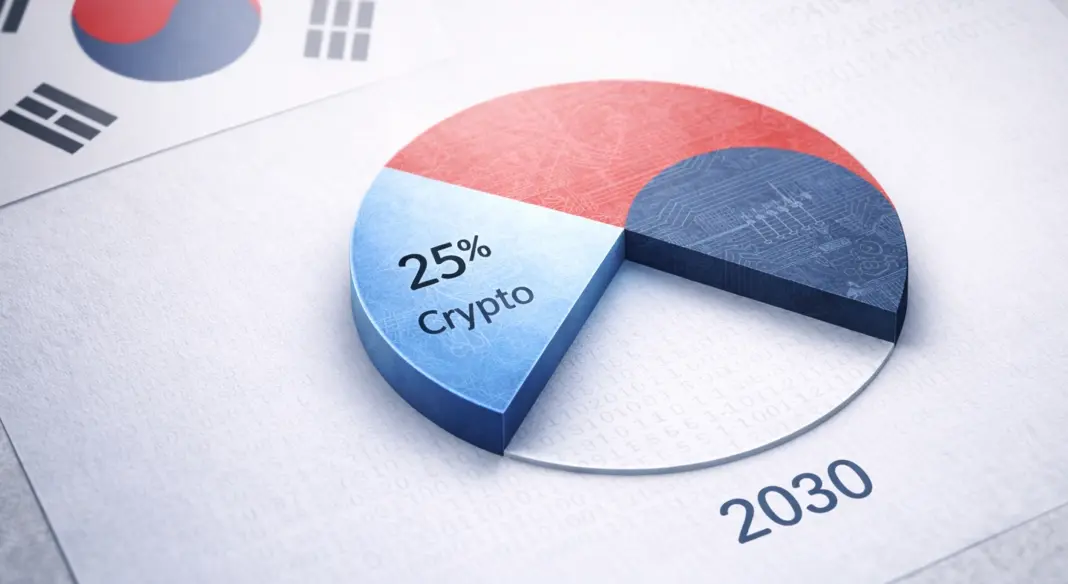

South Korea crypto budget allocation turns heads worldwide. They’re gunning for 25% of the $499.2 billion national treasury, routed through digital assets by decade’s end.
Kicks off with EV subsidies as deposit tokens come 2026.
Stay ahead in the crypto world – follow us on X for the latest updates, insights, and trends!🚀
South Korea Crypto Budget Allocation Kicks Off with Hangang
The 2026 Economic Growth Strategy slots in the Digital Currency Utilization Plan to streamline treasury ops.
Bank of Korea’s Project Hangang puts deposit tokens through paces on blockchain rails, test circulation, redemption, voucher-style limits to slash fraud and hustle handouts.
EV handouts are in the first wave by mid-year, trimming settlement lags that plague old ways. Deputy PM Koo Yun-cheol lays it bold, and says they want to be more proactive.
“We plan to use fiscal policy more proactively to drive a major transformation.”
Wire it into the dBrain system, and watch execution, distribution, settlement go full digital.
Singapore Blueprint Sharpens South Korea Crypto Budget Edge
This blueprint borrows heavy from Singapore’s playbook, like their 2021-launched Project Orchid where MAS ran wholesale CBDC trials blending stablecoin vibes for cross-border payments, slicing pilot costs by up to 50% while testing retail hooks.
South Korea amps it, e-wallets for tokens, POS links at mom-and-pop shops, turning subsidies into everyday spend fuel. It’s a nice plan, and it looks like it’s working.
Legal Tweaks Pave South Korea Crypto Budget Path
Rewrite the National Treasury Fund Management Act, deposit tokens dodge “funds” label now, but laws bend soon.
Stablecoins loom large, Phase 2 Virtual Asset Bill demands $3.43M issuer capital, 100% gov bond backing. Financial Services Commission herds it. Assembly grills the details.
BOK Revives CBDC Amid South Korea Crypto Budget Push
Bank of Korea reboots CBDC after rocky road, phase one piloted four years back in 2022, hit pause one for privacy gripes and tech hitches in real-user tests.
Second stall? New administration swerved to stablecoin chats post-election, renaming the team and shelving Hangang for Korean Won stablecoin focus.
What flipped it? Experts say subsidy squeeze, $7B cash blasts, $400M vouchers last year via clunky cards and banks begged for better.
Stablecoin bill clarity unlocked the thaw, so locals prep digital won systems.
Hangang phase two zooms on handouts, promising fat cuts in distribution drag.
Why South Korea Crypto Budget Allocation Is A Bid Deal
Seoul’s brass wagering treasury treasure on chain magic, fraud-zapping, instant, pennies-on-the-dollar. South Korea crypto budget allocation flips fiscal drudgery to dynamo.
Pauses taught ’em valuable lesson, pivot quick, or lag. Funny to see governments chase their tails then sprint ahead.
Either way, the consensus now is that by 2030, this could be the new normal.
Disclosure:This article does not contain investment advice or recommendations. Every investment and trading move involves risk, and readers should conduct their own research when making a decision.
Kriptoworld.com accepts no liability for any errors in the articles or for any financial loss resulting from incorrect information.

Cryptocurrency and Web3 expert, founder of Kriptoworld
LinkedIn | X (Twitter) | More articles
With years of experience covering the blockchain space, András delivers insightful reporting on DeFi, tokenization, altcoins, and crypto regulations shaping the digital economy.
📅 Published: January 13, 2026 • 🕓 Last updated: January 13, 2026
✉️ Contact: [email protected]
