

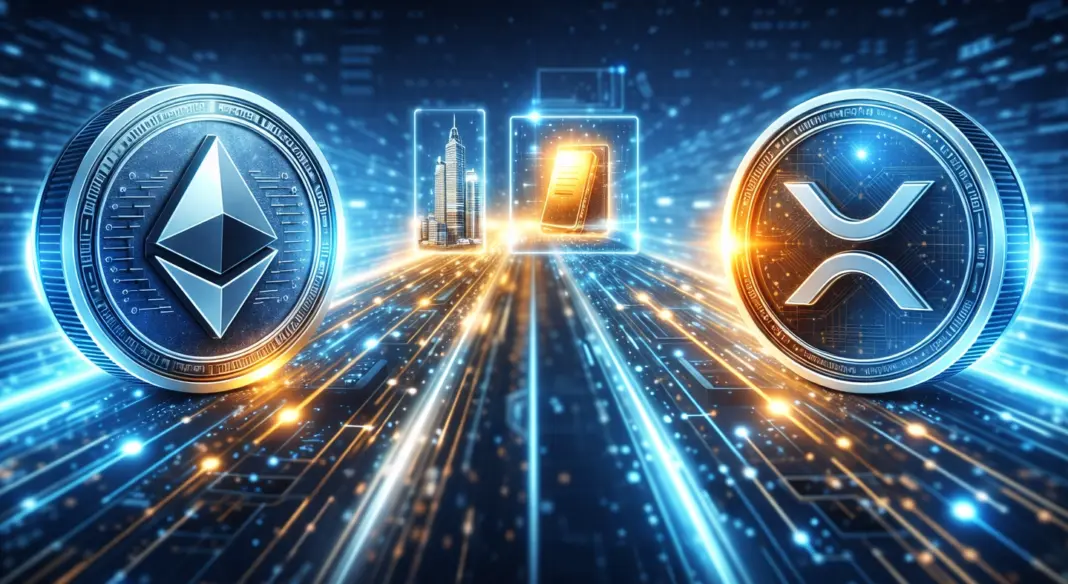

RWA tokenization is becoming a measurable competition between blockchain networks, not just a conference buzzword.
Ethereum-based real-world assets have now surpassed $15 billion in value, according to recent reporting.
At the same time, XRP Ledger is drawing billions in tokenized asset activity as it positions itself for institutional use cases.
This is a live volume race.
Ethereum’s first-mover advantage
Ethereum has dominated DeFi and token issuance for years. It still does.
That ecosystem depth now translates into RWA leadership.
Why? Mature smart contract infrastructure, institutional custody integrations, established token standards, and broad DeFi liquidity.
Tokenized Treasuries, private credit, and other real-world instruments increasingly settle on Ethereum.
Crossing the $15B mark signals that tokenization is moving beyond pilot programs. It reflects capital allocation.
XRP Ledger’s institutional positioning
XRP Ledger is positioning itself around institutional use rather than competing on DeFi culture.
Key strengths include fast settlement, low transaction costs, focus on cross-border finance, and partnerships aligned with financial institutions.
As banks and payment firms explore tokenization, XRP markets itself as infrastructure for compliant, high-throughput financial flows. The competition is ecosystem depth vs institutional alignment.
Why tokenization thrives in slower markets
Interestingly, RWA tokenization often grows during market stagnation. It looks like it is less dependent on speculative momentum.
Unlike memecoins or high-beta altcoins, tokenized RWAs offer yield-bearing instruments, predictable cash flows, and familiar asset classes.
In risk-off environments, institutions look for structured exposure, and RWA tokenization fits that need.
TradFi liquidity migration, and the implications
What we are witnessing is gradual liquidity migration.
Traditional financial assets are being re-wrapped onto blockchain rails, and in reality, this migration digitizes bank products rather than eliminating banks.
Ethereum and XRP Ledger represent two models: Ethereum offers open, composable financial infrastructure, while XRP Ledger provides an efficiency-focused institutional rail. Both can coexist.
The RWA race is about backend integration. When billions in real-world assets move on-chain, settlement speeds increase, transparency improves, and global access expands.
RWA tokenization is becoming a structural layer of the crypto ecosystem.
The question now is which chains will capture the largest share of institutional capital, not just whether tokenization will grow.

Cryptocurrency and Web3 expert, founder of Kriptoworld
LinkedIn | X (Twitter) | More articles
With years of experience covering the blockchain space, András delivers insightful reporting on DeFi, tokenization, altcoins, and crypto regulations shaping the digital economy.
📅 Published: March 4, 2026 • 🕓 Last updated: March 4, 2026
✉️ Contact: [email protected]
Disclosure:This article does not contain investment advice or recommendations. Every investment and trading move involves risk, and readers should conduct their own research when making a decision.
Kriptoworld.com accepts no liability for any errors in the articles or for any financial loss resulting from incorrect information.
