

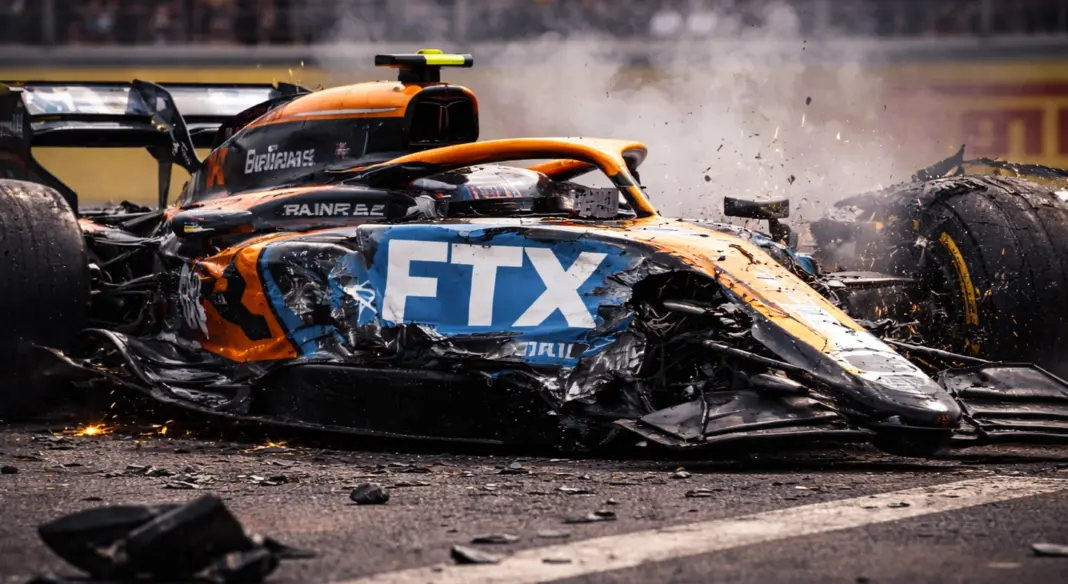

Formula 1 was supposed to be crypto’s big, glossy billboard to the world.
Two of the highest‑profile races on the calendar, Bahrain and Saudi Arabia, were lined up as prime showcase slots for exchanges and blockchain brands that have spent hundreds of millions to get their logos on cars, track walls, and global broadcasts.
Stay ahead in the crypto world – follow us on X for the latest updates, insights, and trends!🚀
Now, with both events facing cancellation because of the escalating war in the Middle East, that carefully built visibility is suddenly at risk.
For an industry obsessed with “mainstream adoption,” it’s like a cold shower, because when your brand hangs on real‑world events, geopolitics can pull the plug overnight.
What just happened to F1 and crypto sponsors
Safety concerns linked to the U.S.–Iran conflict have pushed F1 toward canceling its upcoming races in Bahrain and Saudi Arabia, two of the most lucrative stops on the schedule.
Those races are loaded with crypto exposure, from trackside signage and hospitality activations to team liveries tied to exchanges like OKX, Crypto.com, and Bybit, plus other big‑name platforms.
If the races don’t go ahead, teams lose race fees and local hosting income, while sponsors lose the global TV and on‑site reach they paid millions for and carefully timed around a packed 2026 calendar.
Because that calendar is already stretched to its limit, there’s almost no room to “just reschedule it somewhere else later,” which means the lost impressions, hospitality, and trackside campaigns likely never come back.
Geopolitics vs. crypto’s mainstream push
This isn’t the first time macro shocks have collided with crypto, and it likely won’t be the last.
When the latest U.S.–Iran war flare‑up began, bitcoin was one of the first assets to react, selling off hard on the initial headlines and weekend risk panic, then, within about two weeks, outperforming most major traditional markets.
The point is that wars also redraw the map of where and how crypto can safely show up in public life, from conferences and trading hubs to sports and entertainment.
Brands that saw F1 sponsorships as “safe mainstream exposure” are now learning that events in contested regions come with their own hidden risk premium, one that doesn’t show up in a CPM spreadsheet until something actually breaks.
Why this matters if you’re just watching from the sidelines
It’s easy to see logos on cars, race suits, and podium backdrops and assume crypto has “made it” into the mainstream.
But the cancellations in Bahrain and Saudi Arabia, and the scramble around multi‑million‑dollar sponsorship contracts, show how fragile that visibility really is when it depends on a live event in or near a conflict zone.
Marketing gains that took years and big checks to secure can vanish in a single news cycle, even if the underlying networks, trading volumes, and user adoption keep moving in the background.
If you care about crypto’s long‑term adoption story, it’s worth tracking not just price charts or ETF flows, but also where the industry chooses to bolt its brand, and how exposed those choices are to forces no protocol upgrade can control.
The open question: does crypto adapt or double down
From here, F1 teams and their crypto sponsors have some uncomfortable decisions to make.
They can push for stronger contract protections and insurance, quietly diversify away from the highest‑risk venues, or simply accept this level of geopolitical chaos as “the cost of being global” and keep spending into the same channels.
Either way, the F1 story is a clear signal: crypto’s real‑world presence isn’t just about clever partnerships and logo placements anymore.
There are new questions. How do those partnerships hold up when the world gets messy, and who is left carrying the risk when the lights go out and the race never starts?

Cryptocurrency and Web3 expert, founder of Kriptoworld
LinkedIn | X (Twitter) | More articles
With years of experience covering the blockchain space, András delivers insightful reporting on DeFi, tokenization, altcoins, and crypto regulations shaping the digital economy.
📅 Published: March 16, 2026 • 🕓 Last updated: March 16, 2026
✉️ Contact: [email protected]
Disclosure:This article does not contain investment advice or recommendations. Every investment and trading move involves risk, and readers should conduct their own research when making a decision.
Kriptoworld.com accepts no liability for any errors in the articles or for any financial loss resulting from incorrect information.
