


If you only skim headlines, it sounds like NFTs just got a regulatory green light.
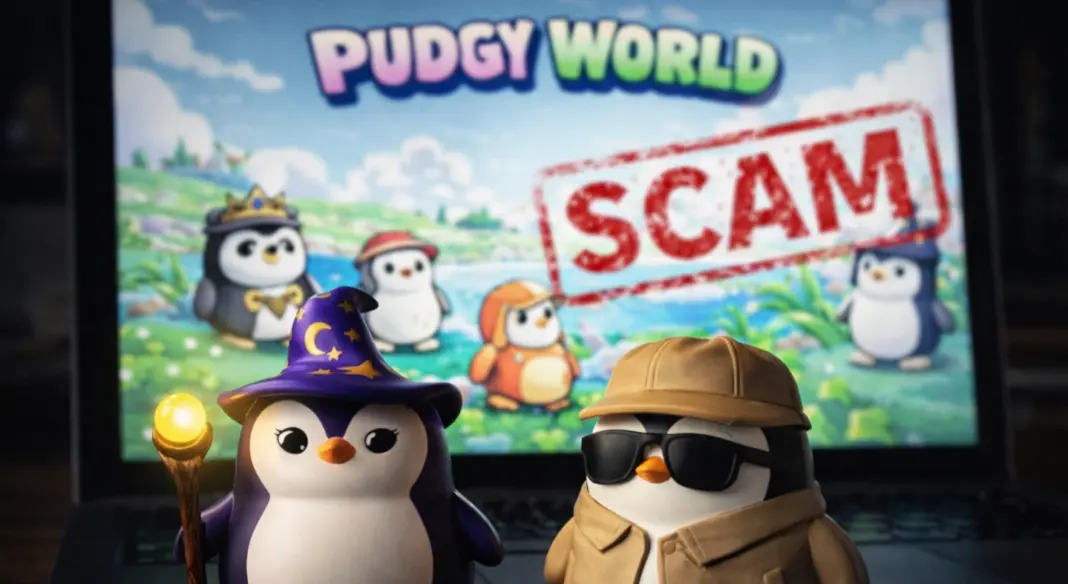
SEC Chair Paul Atkins has clarified that, under the agency’s new taxonomy, most NFTs fall into the “digital collectibles” bucket rather than the securities bucket, while a fresh phishing campaign targeting Pudgy Penguins’ new Pudgy World game is a reminder that retail’s biggest NFT risk is still very basic fraud.
Stay ahead in the crypto world – follow us on X for the latest updates, insights, and trends!🚀
Put differently, the legal story is getting cleaner at exactly the same time the user‑safety story stays messy.
A lot of newcomers hear “not a security” and assume “probably safe,” when those are two completely different things.
What the SEC is actually saying about NFTs
Atkins said the SEC’s new framework treats digital collectibles as a distinct category that is generally not considered a security under federal law.
In practice, that means standard NFTs tied to art, in‑game items, culture, or internet memes usually sit outside the SEC’s main enforcement lane, as long as they are not packaged and sold like investments that depend on a team’s future managerial efforts.
That does not mean NFTs are automatically immune from securities law.
The SEC has already shown in prior cases that if a project markets NFTs with profit promises, pooled‑fund structures, or revenue‑sharing tied to a future business, regulators can still argue that buyers were really purchasing an investment contract rather than a collectible.
So Atkins’ message is more nuanced than “NFTs are fine”.
A normal PFP or game item is usually a collectible, but the economics and marketing around it can still turn the same basic format into something the SEC sees very differently.
Pudgy Penguins’ new game, and the fake version
While lawyers argue over taxonomy, scammers have not slowed down for even a second.
Pudgy Penguins recently launched Pudgy World, a free browser‑based game tied to its NFT brand where players explore a virtual world, customize penguin avatars, and unlock certain features by connecting crypto wallets.
Within days, Malwarebytes Labs flagged a phishing site mimicking the game at a look‑alike domain, using copied branding and a fake “connect wallet” flow to steal wallet credentials.
The trick is nasty because it leans on something the real game actually does: when users pick a wallet on the phishing site, it displays what looks like a normal wallet unlock screen, but it is really a cloned interface designed to capture passwords or seed phrases typed into the page.
New users are especially vulnerable here, because the official game teaches them that wallet connection is a normal part of the experience, and the scam steps in before they have built any instinct for checking URLs, verified announcements, or bookmarks.
Legal clarity does not protect you from basic scams
Put side by side, the SEC’s NFT messaging and the Pudgy Penguins phishing campaign highlight two very different layers of risk.
One is structural and legal: whether a project’s NFTs might be treated as securities if they are marketed as investments or linked to profit rights.
The other is operational and consumer‑level: whether users can be tricked into handing over wallet credentials to a fake site even when the underlying NFT is nothing more than a digital collectible, considered as “safe”..
The practical takeaway is simple. “Not a security” does not mean “low risk.”
It only means the SEC sees the asset more like a collectible than a stock.
If you touch NFT projects like Pudgy World, use official links, verified social accounts, or your own bookmarks, also, never trust ads, DMs, or random search results, and never, never, ever type a seed phrase or full wallet password into a web form, because that is an immediate red flag.
Regulation is slowly making NFTs easier to classify. But for most users, the bigger threat still is not whether their JPEG counts as a security, but the fake site waiting one typo away from the real one.

Cryptocurrency and Web3 expert, founder of Kriptoworld
LinkedIn | X (Twitter) | More articles
With years of experience covering the blockchain space, András delivers insightful reporting on DeFi, tokenization, altcoins, and crypto regulations shaping the digital economy.
📅 Published: March 20, 2026 • 🕓 Last updated: March 20, 2026
✉️ Contact: [email protected]
Disclosure:This article does not contain investment advice or recommendations. Every investment and trading move involves risk, and readers should conduct their own research when making a decision.
Kriptoworld.com accepts no liability for any errors in the articles or for any financial loss resulting from incorrect information.
