

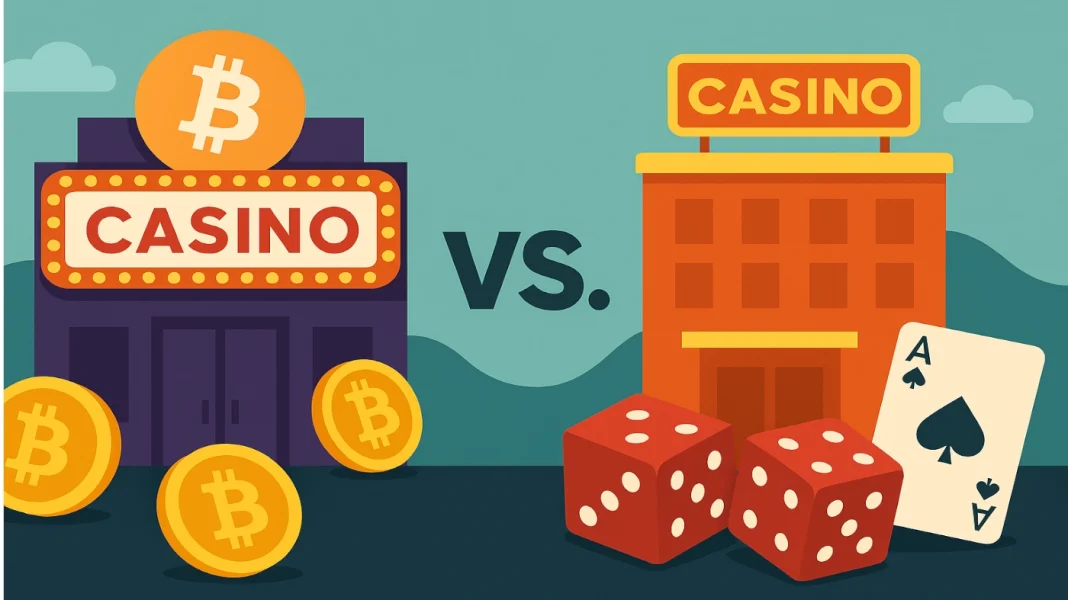

And they’re likely dodging the law? Last year, crypto casinos hauled in $81.4 billion in gross gaming revenue, and that’s five times what they pulled in back in 2022.
These crypto gambling dens aren’t just some fringe players anymore, they’re now neck-and-neck with the big traditional casinos we all know, the ones with fancy lights and cocktail waitresses.
Expansion
Most countries have outlawed these crypto casinos. The U.S., China, the EU, the UK, you name it, they’re cracking down.
But gamblers are a crafty bunch. Using VPNs, mirror sites, and URL redirects, they slip past the bans like ghosts in the night.
And it’s not some underground secret either, there are detailed online guides showing you exactly how to dodge these geo-blocks.
Influencers on social media are pushing users to these sites and even selling user accounts on peer-to-peer marketplaces.
Jordan Lea, a former problem gambler turned campaigner, says the public’s well aware of this setup, yet these platforms keep thriving despite the legal smackdowns.
Most of these crypto casinos are registered in places with looser rules, like Curaçao, Malta, the Isle of Man, Gibraltar. Big names like Stake, Rollbit, and Roobet have exploded in size, now rivaling traditional gambling giants.
Stake alone claims it handles up to 4% of all Bitcoin transactions worldwide and boasts 25 million users who’ve placed 300 billion bets since 2017.
Grey zone
These offshore crypto casinos operate in a legal gray zone. In the UK and US, it’s not illegal for you to gamble on these offshore sites using a VPN, but the operators themselves might be breaking the law by providing facilities to residents. Enforcement?
Ha! Lawyers admit there’s practically no way to crack down on these offshore players. Regulators and even domestic operators often just turn a blind eye, letting these rogue sites offer what licensed companies can’t.
And here’s where it gets ugly, because these crypto casinos don’t bother with the usual safety nets, no spending limits, no identity checks, no affordability tests.
That’s a jackpot for underage gamblers, addicts, and people in countries where gambling’s banned, like China.
Demand
Rob Minnick, a former underage crypto gambler, says people only stick to these sites because they’ve got nowhere else to go.
Plus, the swings in crypto prices add a dangerous, and exciting twist. One gambler described it as a double gamble, betting not just on the games but on the volatile crypto values themselves.
When prices rise, they think they’re rolling in passive income, when they crash, they chase losses, spiraling deeper into trouble.
Disclosure:This article does not contain investment advice or recommendations. Every investment and trading move involves risk, and readers should conduct their own research when making a decision.
Kriptoworld.com accepts no liability for any errors in the articles or for any financial loss resulting from incorrect information.
