

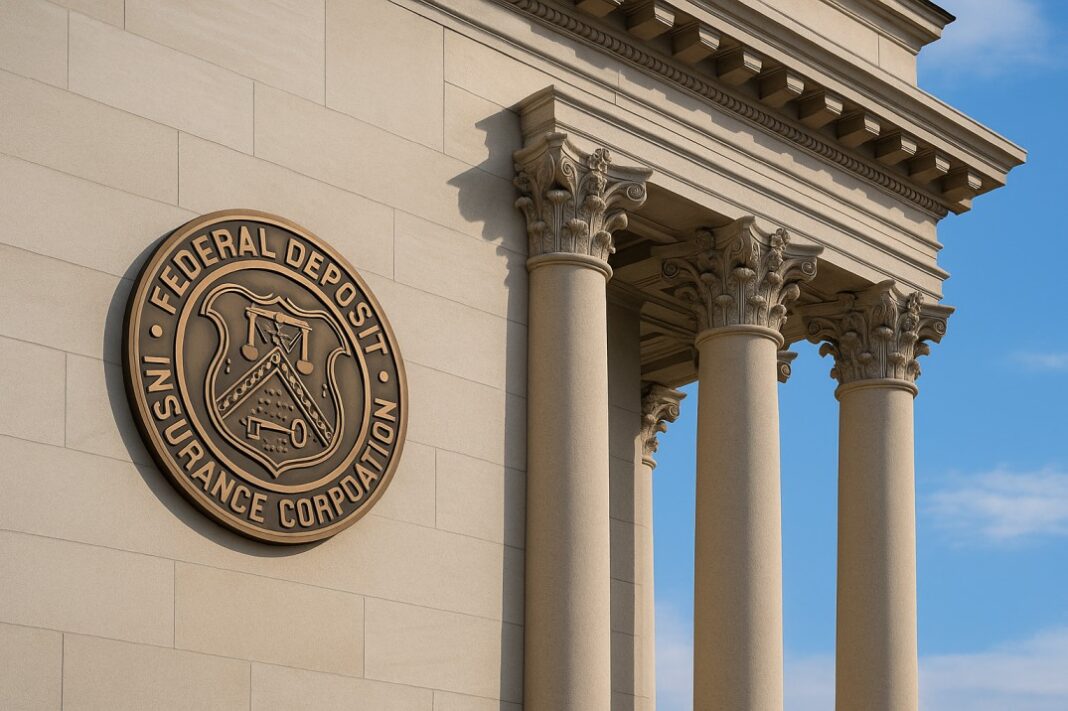

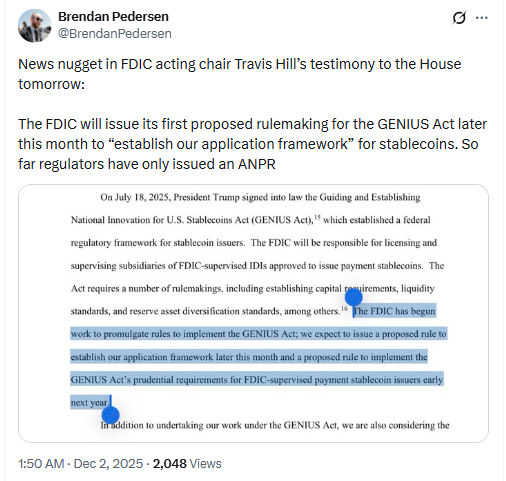
The Federal Deposit Insurance Corporation (FDIC) plans to publish its first US stablecoin rule framework later this month, acting chair Travis Hill said in prepared remarks for the House Financial Services Committee.
The rules will implement the GENIUS Act, signed in July by President Donald Trump. The proposal will explain how FDIC-supervised bank stablecoin issuers must apply for approval and operate under the new law.
Stay ahead in the crypto world – follow us on X for the latest updates, insights, and trends!🚀
Hill said a second proposal is planned for early next year, setting out prudential standards for issuers under FDIC oversight.
GENIUS Act Puts FDIC Over Bank Stablecoin Issuers
Under the GENIUS Act, the FDIC becomes the primary regulator for stablecoin-issuing subsidiaries of the banks and firms it already supervises. Other agencies will oversee different types of issuers, including non-bank stablecoin providers.
Hill said the FDIC must set capital requirements, liquidity rules, and diversification standards for reserve assets. These standards aim to ensure issuers can meet redemption requests during market stress.
The FDIC will first release the framework as a public proposal, take comments, and then finalize the rule after reviewing industry feedback.
Tokenized Deposits and Fed Coordination
Hill also said the FDIC is preparing guidance on tokenized deposits, which are blockchain-based versions of bank deposits.
The work follows July recommendations from the President’s Working Group on Digital Asset Markets, which asked regulators to clarify which blockchain activities banks can perform.
The guidance will explain how tokenized deposits fit under existing banking rules, including capital, liquidity, and reporting treatment. It responds to banks testing blockchain rails for payments and settlement.
In separate prepared remarks for the same hearing, Federal Reserve vice chair for supervision Michelle Bowman said the Fed is working with the FDIC and others on capital and liquidity standards for stablecoin-related activity.
Officials from the Office of the Comptroller of the Currency (OCC) and the National Credit Union Administration (NCUA) are also due to testify, underscoring that the GENIUS Act touches banks, credit unions, and other charter types involved with US dollar-backed stablecoins.
Disclosure:This article does not contain investment advice or recommendations. Every investment and trading move involves risk, and readers should conduct their own research when making a decision.
Kriptoworld.com accepts no liability for any errors in the articles or for any financial loss resulting from incorrect information.

Tatevik Avetisyan is an editor at Kriptoworld who covers emerging crypto trends, blockchain innovation, and altcoin developments. She is passionate about breaking down complex stories for a global audience and making digital finance more accessible.
📅 Published: December 2, 2025 • 🕓 Last updated: December 2, 2025
