

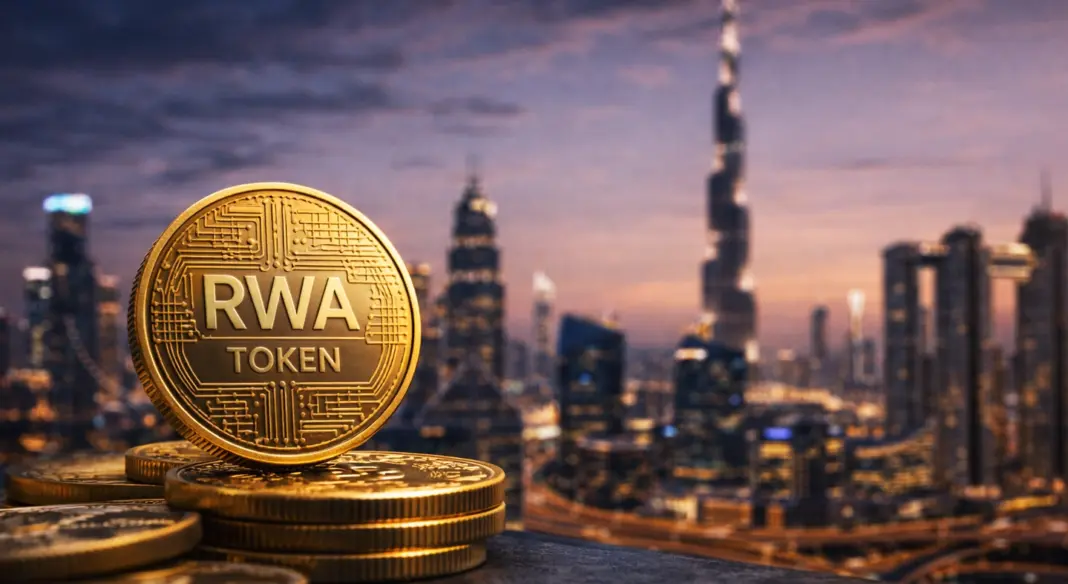

Crypto feels sluggish in a lot of places right now. Prices chop around, certain narratives repeat themselves, and the market keeps looking for a fresh reason to care. RWA tokenization keeps moving anyway.
This part of crypto does not grow on excitement alone. It grows through custody, compliance, settlement, and distribution.
Stay ahead in the crypto world – follow us on X for the latest updates, insights, and trends!🚀
The process is slower, less dramatic, and far more durable than the usual cycle-driven trade.
Why RWA tokenization keeps moving in a weak market
RWA tokenization holding up during a softer market is a useful signal.
It suggests this is infrastructure growth, not mood-driven growth. When tokenization continues advancing in weak conditions, it usually means institutions are still testing the system, product teams are still building access rails, and capital is still looking for structured exposure rather than pure beta. That is a different kind of momentum.
Crypto media’s coverage points in that direction, showing tokenized RWAs holding up better than broader crypto sentiment while infrastructure and distribution layers continue to develop.
This is less about people suddenly turning optimistic.
Systems are just becoming usable.
Why equities tokenization raises the stakes
Equities tokenization is where the story becomes more demanding.
Tokenized Treasuries are relatively easy for institutions to understand. The core asset already fits inside traditional finance.
Tokenization mainly changes settlement, access, and distribution.
Tokenized stocks bring a different level of friction because they run into securities law, investor protection rules, exchange listing requirements, corporate actions, and jurisdictional liability questions.
That is why the idea that equities tokenization will eventually arrive can sound both convincing and premature at the same time.
The technical side is only one part of the puzzle. The legal wrapper is where the pace of adoption will actually be decided.
There’s an optimistic side of that argument. The harder part sits in policy design and execution.
Why distribution and liquidity matter more than launch announcements
A tokenized asset can be well designed and still fail to matter if it has weak distribution.
That is where names like Ondo matter, and why 1inch shows up in this conversation.
Tokenization only becomes meaningful when assets have reliable access points, usable liquidity routes, and market depth that extends beyond niche venues.
Once those pieces are in place, the product starts acting less like a demo and more like a market.
Issuance alone is not enough. Liquidity and infrastructure is where real traction begins.
Why Dubai’s push matters
Dubai’s positioning looks less like branding and more like jurisdiction competition.
BeInCrypto describes Dubai as trying to lead the RWA race, and that fits a familiar pattern.
Places with clearer rules and faster coordination usually attract experimentation capital earlier than slower jurisdictions do.
Once that process starts, momentum can build around the hub itself.
For institutional readers, the takeaway is fairly direct. RWA tokenization becomes scalable when liquidity, compliance, and settlement reliability begin to align.
Dubai is trying to align those pieces in one place. Of course, that does not guarantee long-term dominance, but it does create a real advantage in the early stage.
What matters from here
The next phase of RWA tokenization likely will be shaped by repetition and operational quality.
The important signals will come from assets that see repeated issuance rather than one-off launches, from venues that provide usable secondary liquidity, and from jurisdictions that offer rules firms can actually rely on.
Custody and reporting standards will matter just as much as the asset itself.
That is where hype starts fading and structure starts taking over. RWA tokenization is holding up because it is being built as market infrastructure rather than sentiment trade.
Equities tokenization raises the opportunity, but it also raises the legal difficulty.
Ondo, 1inch, and similar players show that distribution and liquidity are becoming central to the race. Dubai’s positioning adds another layer: this is also a competition between jurisdictions.
Slow trend. But a durable trend.

Cryptocurrency and Web3 expert, founder of Kriptoworld
LinkedIn | X (Twitter) | More articles
With years of experience covering the blockchain space, András delivers insightful reporting on DeFi, tokenization, altcoins, and crypto regulations shaping the digital economy.
📅 Published: March 9, 2026 • 🕓 Last updated: March 9, 2026
✉️ Contact: [email protected]
Disclosure:This article does not contain investment advice or recommendations. Every investment and trading move involves risk, and readers should conduct their own research when making a decision.
Kriptoworld.com accepts no liability for any errors in the articles or for any financial loss resulting from incorrect information.
