



While a lot of the crypto world is focused on daily price moves, something bigger is happening on the global stage.
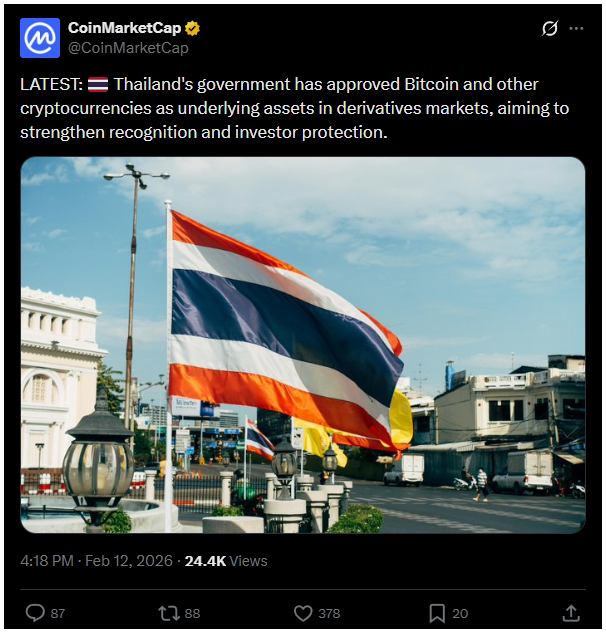
Thailand has officially approved cryptocurrences, like bitcoin as an underlying asset for regulated derivatives.
Stay ahead in the crypto world – follow us on X for the latest updates, insights, and trends!🚀
This means bitcoin and other digital assets can now be used as the basis for futures, options, and other financial products in the country’s formal markets.
Thailand bitcoin derivatives get regulatory green light
The Thai government gave the green light to changes in the Derivatives Act.
The Securities and Exchange Commission will now update the rules so that licensed operators can offer crypto-linked contracts.
This puts Bitcoin on the same level as traditional assets in the eyes of regulators.
For regular people interested in crypto, this is actually a pretty big deal. Derivatives markets are where a lot of serious institutional money flows.
When a country allows Bitcoin to be part of that system, crypto is moving from the edges into mainstream financial infrastructure.
Thailand bitcoin derivatives signal Asia’s competitive push
Thailand isn’t the first in Asia, but it’s one of the clearest recent examples.
Countries in the region have been competing to become crypto-friendly hubs, but this move strengthens Thailand’s position and shows that parts of Asia are actively building the legal framework for bigger adoption.
It also sends a message to the rest of the world. While some places are still debating whether crypto should even exist, others are already treating it as a legitimate asset class that can be traded in regulated environments.
What this approval means for retail
Of course, this doesn’t mean everything will change overnight. There will be rules, oversight, and probably some limitations at the beginning, but the direction is clear.
More structure, more legitimacy, and more ways for traditional finance to interact with crypto.
For everyday people, these kinds of developments matter because they help reduce the “wild west” feeling around the industry.
When governments start writing clear rules and including Bitcoin in their financial systems, it becomes easier for more people and institutions to participate safely.
Thailand’s decision is another step in that direction. Asia keeps moving forward, and the rest of the world is watching.

Crypto market researcher and external contributor at Kriptoworld
Wheel. Steam engine. Bitcoin.
📅 Published: February 13, 2026 • 🕓 Last updated: February 13, 2026
✉️ Contact: [email protected]
Disclosure:This article does not contain investment advice or recommendations. Every investment and trading move involves risk, and readers should conduct their own research when making a decision.
Kriptoworld.com accepts no liability for any errors in the articles or for any financial loss resulting from incorrect information.
