

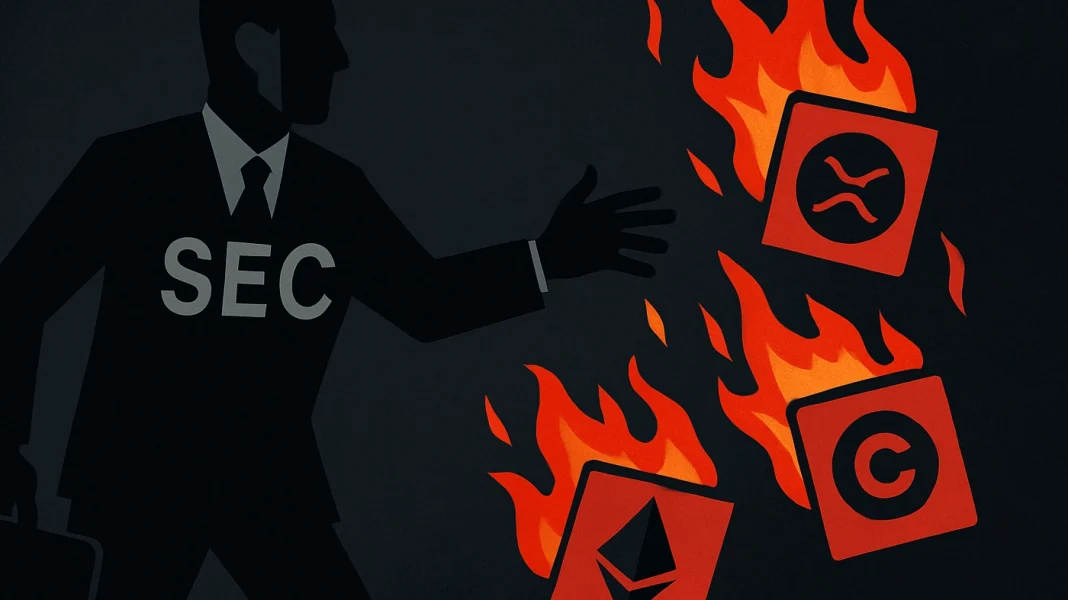

The U.S. SEC, the same guys who’ve been chasing crypto firms like hounds after a fox, has done a complete 180.
In just the first quarter of 2025, they’ve dropped not one, not two, but ten cases against major crypto players.
The watchdog that once barked loudest under Gary Gensler is now wagging its tail under the Trump administration’s new leadership.
You shall not pass
Let’s rewind a bit. Back in the Gensler era, the SEC was all about regulation by enforcement.
They slapped lawsuits on crypto companies left and right, claiming unregistered securities were everywhere, tokens, NFTs, you name it. But now? It’s a whole new ballgame.
Enter Paul Atkins, the new SEC Chair and a known crypto ally. His appointment in April was like flipping a switch.
Suddenly, the agency isn’t just talking about being pro-crypto, it’s walking the walk. And it started with a bang, dropping high-profile cases against firms like Ripple, Coinbase, and Kraken.
Ripple effect
Remember Ripple? That legal battle with the SEC dragged on for years, making headlines since 2020.
It was one of the longest-running fights in crypto history. But last month? Poof. Case dismissed.
Ripple CEO Brad Garlinghouse confirmed it himself, like a weight lifted off the industry’s shoulders.
And Ripple wasn’t alone. Crypto.com? Case closed in March. Immutable? Same deal.
Even Yuga Labs, the company behind Bored Apes, got a pass after three years of scrutiny.
The list goes on, Uniswap, Gemini, Opensea, all free to breathe again. Imagine the sentiment on the team-building weekend party!
Doing business
So why this sudden change of heart? Simple, Trump’s administration wants to boost innovation instead of stifling it.
Commissioner Hester Peirce, aka Crypto Mom, is leading a new task force focused on balancing regulation with growth.
It’s like giving crypto firms a second chance to prove they can play nice without Big Brother breathing down their necks.
But not everyone’s cheering. Charles Wayn from Galxe warns that this shift puts more responsibility on crypto companies to protect consumers, a risky move in an industry still haunted by bad actors.
On Monday, the SEC informed our litigation counsel @JackBaughman27 that it has closed its investigation into @Gemini and will not be pursuing an enforcement action against us. This comes 699 days after the start of their investigation and 277 days after they sent us a Wells… pic.twitter.com/dTjg9CJXVl
— Cameron Winklevoss (@cameron) February 26, 2025
Without strict oversight, users will have to trust these firms to do the right thing, a gamble some aren’t willing to take.
Have you read it yet? Solana memecoins are back?
Disclosure:This article does not contain investment advice or recommendations. Every investment and trading move involves risk, and readers should conduct their own research when making a decision.
Kriptoworld.com accepts no liability for any errors in the articles or for any financial loss resulting from incorrect information.
