


If you’re waiting for regulation clarity to arrive like a clean bill signing, this is the rude wake-up call: crypto policy doesn’t move in one line.
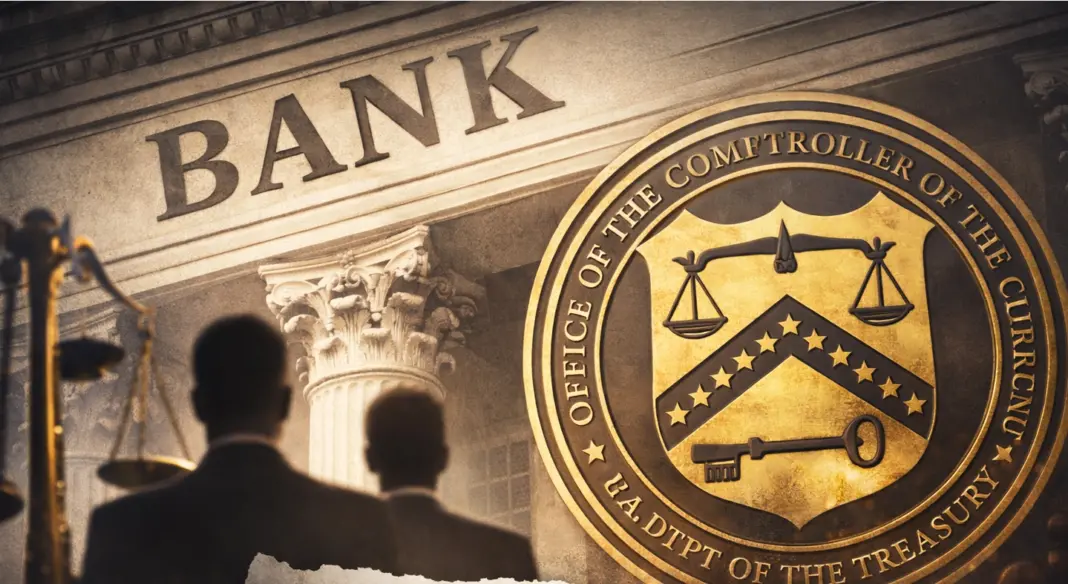
One headline says U.S. banks are considering an OCC lawsuit.
Another says CLARITY Act delays keep piling up, but stablecoin yield isn’t the main bottleneck.
Stay ahead in the crypto world – follow us on X for the latest updates, insights, and trends!🚀
Why would banks sue a regulator?
On paper, banks and regulators are supposed to cooperate. In practice, they collide when the rulebook changes competitive dynamics.
Right now, banks are considering legal action tied to OCC decisions, with references to coverage pointing to broader political and institutional conflict.
The key point is simple, an OCC-related fight is a control story. It can shape who is allowed to operate, who gets a charter path, and how fast regulated crypto services can expand through the banking system.
What the OCC stakes are in crypto
The OCC matters because it sits close to the “banking access” gate. National bank charters and approvals, supervision posture for crypto activity, and the boundary between bank-led crypto rails and crypto-native rails. When banks fight the OCC, it usually signals disagreement over how that gate is being managed.
If banks believe the OCC is shifting policy in ways that change competitive positioning, lawsuits and lobbying become tools of market structure.
CLARITY Act delays: why yield isn’t the real blocker
Experts argue that CLARITY Act delays have many obstacles behind them, but that stablecoin yield is not the core bottleneck. This matters because retail often treats “stablecoin yield rules” as the whole debate.
But legislative delays often come from broader political sequencing, committee priorities, negotiation across agencies and interest groups, and process friction that has nothing to do with one feature like yield.
So even if the market reaches a working consensus on yield design, the bill can still stall.
Regulatory risk is institutional collision
Regulatory uncertainty is multiple institutions pushing against each other at the same time: banks vs regulators, agencies competing over jurisdiction, and lawmakers moving slower than market infrastructure.
That collision creates two effects: slower product building in regulated channels, and faster lobbying and legal escalation behind the scenes. If you want a clean signal to watch, it’s whether the institutional turf war cools down or intensifies.
Because in crypto, who controls the gate often matters more than what the gate says on paper.

Cryptocurrency and Web3 expert, founder of Kriptoworld
LinkedIn | X (Twitter) | More articles
With years of experience covering the blockchain space, András delivers insightful reporting on DeFi, tokenization, altcoins, and crypto regulations shaping the digital economy.
📅 Published: March 11, 2026 • 🕓 Last updated: March 11, 2026
✉️ Contact: [email protected]
Disclosure:This article does not contain investment advice or recommendations. Every investment and trading move involves risk, and readers should conduct their own research when making a decision.
Kriptoworld.com accepts no liability for any errors in the articles or for any financial loss resulting from incorrect information.
