

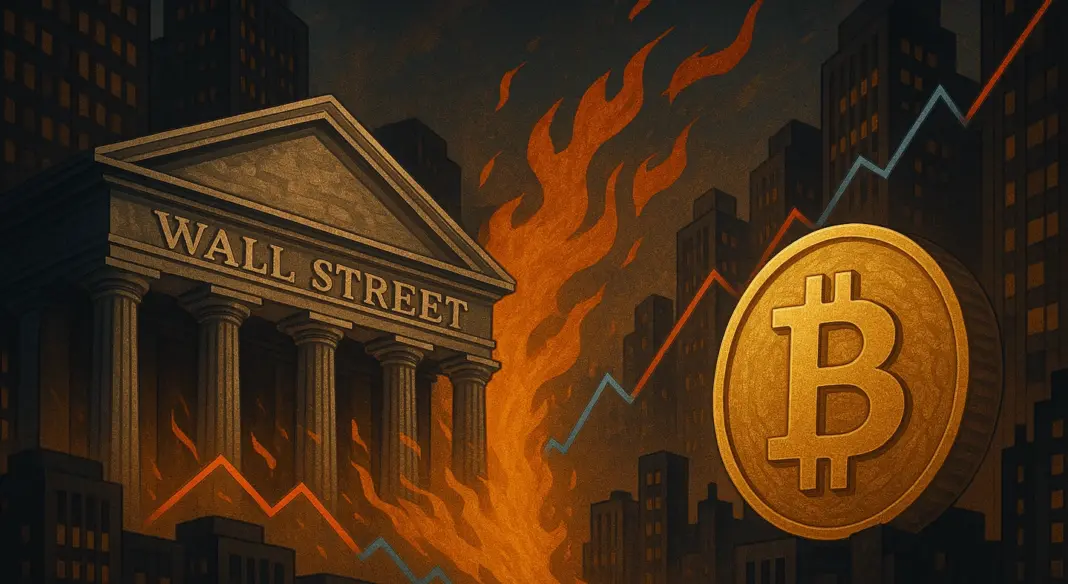

Picture a smoky battlefield where Wall Street titans and crypto mavens clash over the future of tokenized equities, digital stock twins on a blockchain that promise to rewrite how markets tick.
HSBC just dropped the news that the drama heats up as U.S. regulators scratch their heads over whether these on-chain markets get teddy bear hugs or iron-fisted rulebooks.
Stay ahead in the crypto world – follow us on X for the latest updates, insights, and trends!🚀
Many of these decentralized networks look and feel like stock exchanges
Tokenization, once the playground of blockchain idealists, is now knocking on the boardroom doors of TradFi. Stocks, bonds, even real estate turned digital.
These “tokenized equities” are no longer sci-fi.
They’re serious business for anyone wanting to build regulated blockchain trading venues.
The latest episode aired at the SEC’s Investor Advisory Committee, where voices from both camps duked it out.
TradFi warriors insisted that DeFi protocols need to toe the existing exchange line because, well, many of these decentralized networks look and feel like stock exchanges.
Enter Citadel Securities, the market-making behemoth, waving a 13-page letter that basically says DeFi platforms are exchanges under the law, and cutting them slack invites chaos, investor protections be damned.
Modernization is good, but compliance is non-negotiable
Coinbase’s Scott Bauguess marched to a different drummer. His take?
DeFi exchanges live in a parallel universe, flipping the script on old-school markets with code that’s open-source and liquidity automated.
Centralized rules drown this new world in irrelevant red tape, he argued, calling for fresh guidelines that respect decentralization rather than choke it.
SEC head Paul Atkins played the pragmatist, saying tokenization is part of a modernization sweep for U.S. markets, but compliance is non-negotiable.
His colleague Caroline Crenshaw warned about risks hiding in tokenized shadows, like custody troubles, market integrity issues, and the eternal investor protection headache.
The tokenization train has left the station
HSBC is quietly hustling behind the scenes, expanding its Tokenized Deposit Service, a slick blockchain tool letting firms shuffle cash between continents in a flash.
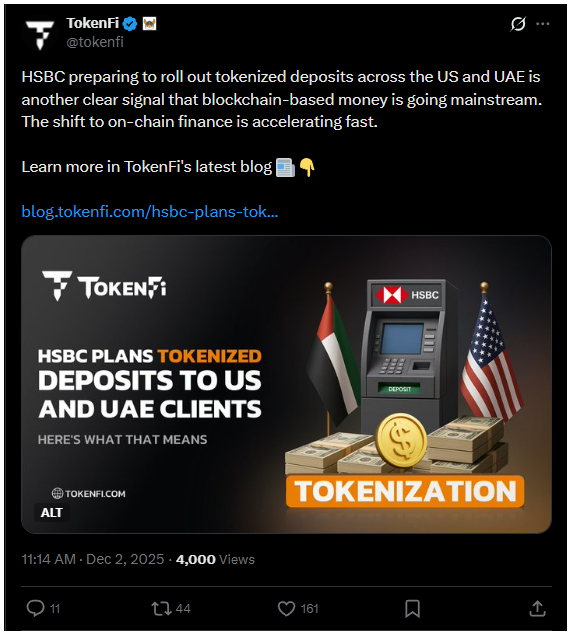
Already rocking UK, Singapore, Hong Kong, and Luxembourg, HSBC eyes the U.S. and UAE to join the party early next year.
Still, HSBC’s brain trust suspects the SEC won’t throw all regulatory caution out the window for tokenized stocks.
Instead, regulators may favor a “sandbox” approach, a tightly controlled playground to see if on-chain trading can play nicely with existing rules.
The analysts foresee a future where tokenized markets march on fully permissioned, regulated blockchains.
These walled gardens would keep regulators in the driver’s seat, tracking who’s who and what’s what, while shielding investors from the open, and vulnerable protocols.
The SEC’s verdict looms just ahead, poised to decide if America’s on-chain stock dreams get a green light or a cold shoulder.
But experts say despite bruised egos and clashing visions, the tokenization train has left the station, and everyone’s scrambling to catch it.
Disclosure:This article does not contain investment advice or recommendations. Every investment and trading move involves risk, and readers should conduct their own research when making a decision.
Kriptoworld.com accepts no liability for any errors in the articles or for any financial loss resulting from incorrect information.

Cryptocurrency and Web3 expert, founder of Kriptoworld
LinkedIn | X (Twitter) | More articles
With years of experience covering the blockchain space, András delivers insightful reporting on DeFi, tokenization, altcoins, and crypto regulations shaping the digital economy.
📅 Published: December 11, 2025 • 🕓 Last updated: December 11, 2025
✉️ Contact: [email protected]
