

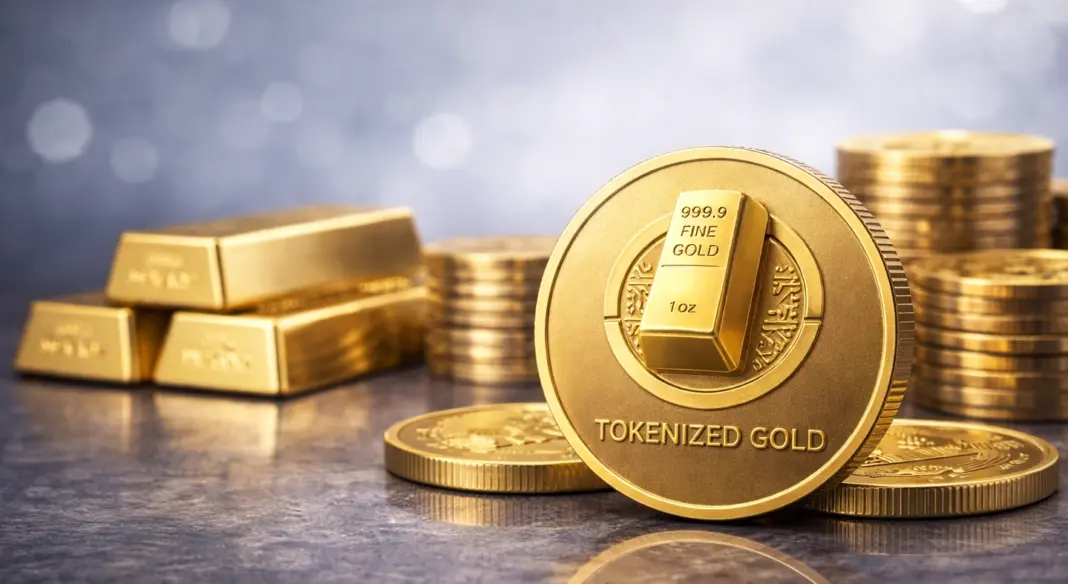

While crypto Twitter argues about memecoins and the next AI narrative, something quieter has been happening. People are buying tokenized gold.
Gold didn’t suddenly get interesting again. Crypto finally fits how people actually want to use it.
Stay ahead in the crypto world – follow us on X for the latest updates, insights, and trends!🚀
According to recent market coverage by CoinDesk, gold-backed tokens are seeing renewed interest from users looking for stability rather than upside. This tells you more about crypto’s future than any L2 launch or token airdrop.
Who uses tokenized gold, and why
Tokenized gold attracts a different user profile than most crypto assets. These users chase capital preservation, not 100x returns.
They want exposure to a familiar store of value, on-chain settlement, portability across platforms, and fewer surprises during market stress.
For some, tokenized gold acts as a hedge inside crypto portfolios. For others, it parks value without leaving the blockchain environment entirely. The key point is intent. Capital preservation and access, not speculation.
That alone tells you where crypto demand is shifting.
How tokenized gold differs from stablecoins
At first glance, tokenized gold and stablecoins can look similar. Both are asset-backed. Both aim for stability.
Both get used as alternatives to volatile tokens. Under the hood, they solve different problems.
Stablecoins track fiat currency, mirroring the monetary system as it exists today. Tokenized gold tracks a physical commodity that sits outside that system.
That distinction matters.
Gold operates independently from central bank policy. It doesn’t inflate away by design. For users worried about currency risk rather than price swings, tokenized gold offers a different kind of anchor.
In practice, this makes tokenized gold less of a transactional tool and more of a strategic allocation.
What this says about crypto’s role
The success of tokenized gold challenges a long-standing crypto narrative. For years, crypto was framed as “new money” meant to replace old systems.
Bitcoin as digital gold. Stablecoins as digital cash. Everything positioned as disruption. Tokenized gold tells a quieter story.
Crypto increasingly functions as infrastructure. A way to move, store, and settle claims on assets that already exist and already have trust.
In this model, crypto extends gold rather than competing with it.
Ownership becomes programmable. Transfers become faster. Settlement becomes global.
The asset stays the same, but the rails change.
Tokenization as an institutional on-ramp
This infrastructure-first framing explains why institutions pay attention to tokenized gold.
Institutions already have assets. What they need is better plumbing.
Tokenized real-world assets, including gold, offer clearer custody models, on-chain auditability, easier integration with other financial instruments, and compatibility with existing risk frameworks.
That’s why tokenization keeps showing up in institutional strategy discussions, even when market sentiment is mixed. It lowers friction without forcing belief in crypto ideology.
For institutions, that’s a feature.
Why this matters beyond gold
Gold just happens to be the leading example.
If tokenized gold can attract demand based on infrastructure advantages alone, the same logic applies to other real-world assets. Bonds. Funds. Commodities. Even equities.
Tokenization has moved past the experimental phase. It’s becoming a baseline capability.
Crypto stops being about convincing people to adopt new assets. It starts being about upgrading how existing assets behave.
The bigger picture
The rise of tokenized gold clarifies crypto’s mission rather than detouring from it. Crypto wins by modernizing money, not by replacing it.
For anyone still expecting adoption to look like mass conversion to new tokens, this might feel underwhelming. For those watching how financial infrastructure actually evolves, it makes perfect sense.
Tokenized gold won’t announce itself with fanfare. It’ll just keep working. And working is how adoption scales.

Crypto market researcher and external contributor at Kriptoworld
Wheel. Steam engine. Bitcoin.
📅 Published: February 10, 2026 • 🕓 Last updated: February 10, 2026
✉️ Contact: [email protected]
Disclosure:This article does not contain investment advice or recommendations. Every investment and trading move involves risk, and readers should conduct their own research when making a decision.
Kriptoworld.com accepts no liability for any errors in the articles or for any financial loss resulting from incorrect information.
