

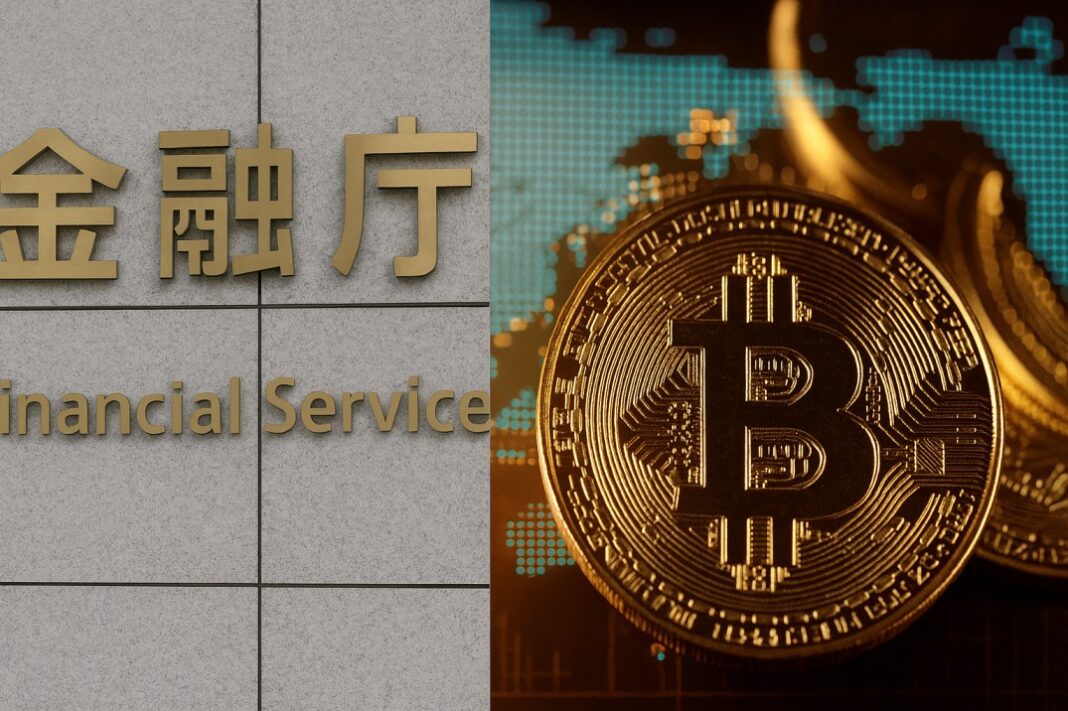

Japan plans strict crypto reserve rules that would force exchanges to hold dedicated funds for customer losses from hacks and failures.
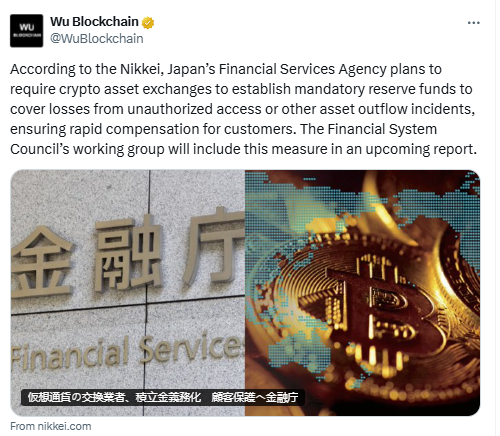
The Financial Services Agency (FSA) wants legal changes that make platforms financially accountable when user assets disappear, Nikkei reported.
Stay ahead in the crypto world – follow us on X for the latest updates, insights, and trends!🚀
The agency aims to submit a bill to parliament in 2026. The proposal would require exchanges to build liability reserves that can directly compensate users if incidents lead to lost coins or cash. These rules would sit on top of existing custody requirements.
Today, Japanese exchanges must store customer coins mainly in cold wallets, kept offline and viewed as harder to attack.
However, platforms that follow these custody rules do not have to set aside specific reserves for losses.
When a major breach or failure hits a thinly capitalized platform, customers can still face recovery gaps.
New Crypto Reserve Model Copies Japan’s Securities Playbook
The planned crypto reserve rules borrow from standards already used in Japan’s securities industry. Securities firms must hold reserves to cover losses tied to illegal or unfair practices, including erroneous orders.
Major Japanese brokers currently hold reserves of about 2 billion to 40 billion yen, or roughly $12.7 million to $255 million.
Required levels depend on trading volumes and risk exposures. Regulators now plan to treat these numbers and formulas as reference points for crypto platforms.
For digital asset exchanges, the FSA intends to set reserve ranges using both these securities precedents and data from past crypto leak cases.
To reduce pressure on balance sheets, the agency is also considering a mixed approach where part of the requirement can be met through insurance, combining cash buffers with risk transfer to third parties.
Japan Tightens Crypto Reserve Rules for Insolvency Protection
The new crypto reserve rules also target exchange failures, not only cyberattacks.
Japan already requires companies to segregate customer assets from their own funds, but authorities want clearer structures for insolvency situations.
Regulators plan to reinforce segregation so that client assets remain clearly separated if a platform goes bankrupt or management loses control.
That structure would help prevent customer funds from merging into the general creditor pool.
The framework would also make it easier for an independent administrator, such as a court-appointed lawyer, to identify and return assets to users.
With segregated accounts and dedicated reserves, an administrator would have a more direct path to distribute what belongs to customers.
Recent Crypto Exchange Hacks Push Japan to Act
Several major crypto exchange hacks have renewed pressure on Japan to strengthen safeguards. In May 2024, domestic platform DMM Bitcoin reported that about 48.2 billion yen worth of Bitcoin had been stolen.
In February 2025, global exchange Bybit disclosed that hackers had taken around $1.46 billion in cryptocurrency.
The scale of that incident showed that even large exchanges that use cold storage remain attractive targets.
These cases revived concerns in Tokyo that technical defenses and custody rules alone cannot fully protect users.
The reserve and insurance approach aims to provide a separate financial backstop that can be used after an incident, regardless of how the breach occurred.
Japan Aligns Crypto Reserve Rules With EU MiCA and Hong Kong
Japan’s crypto reserve rules would move its framework closer to standards in other financial centers. Regulators are watching how Europe and Hong Kong structure protections for customers.
Under the MiCA regime in the European Union, major crypto service providers must hold capital and use insurance to protect client assets. This design seeks to ensure that platforms can absorb shocks instead of relying only on custody practices.
In Hong Kong, licensed exchanges must build loss compensation funds using deposits and insurance policies.
Japan’s plan to formalize liability reserves would bring its regime nearer to these models while still relying on domestic experience from its securities market.
Disclosure:This article does not contain investment advice or recommendations. Every investment and trading move involves risk, and readers should conduct their own research when making a decision.
Kriptoworld.com accepts no liability for any errors in the articles or for any financial loss resulting from incorrect information.

Tatevik Avetisyan is an editor at Kriptoworld who covers emerging crypto trends, blockchain innovation, and altcoin developments. She is passionate about breaking down complex stories for a global audience and making digital finance more accessible.
📅 Published: November 25, 2025 • 🕓 Last updated: November 25, 2025
