


Crypto adoption rarely starts where people expect it.
It doesn’t spread because of whitepapers or bold promises about the future of money. It spreads when crypto quietly shows up inside tools people already use every day.
Stay ahead in the crypto world – follow us on X for the latest updates, insights, and trends!🚀
That’s what makes Telegram’s push toward a built-in crypto checkout layer worth paying attention to.
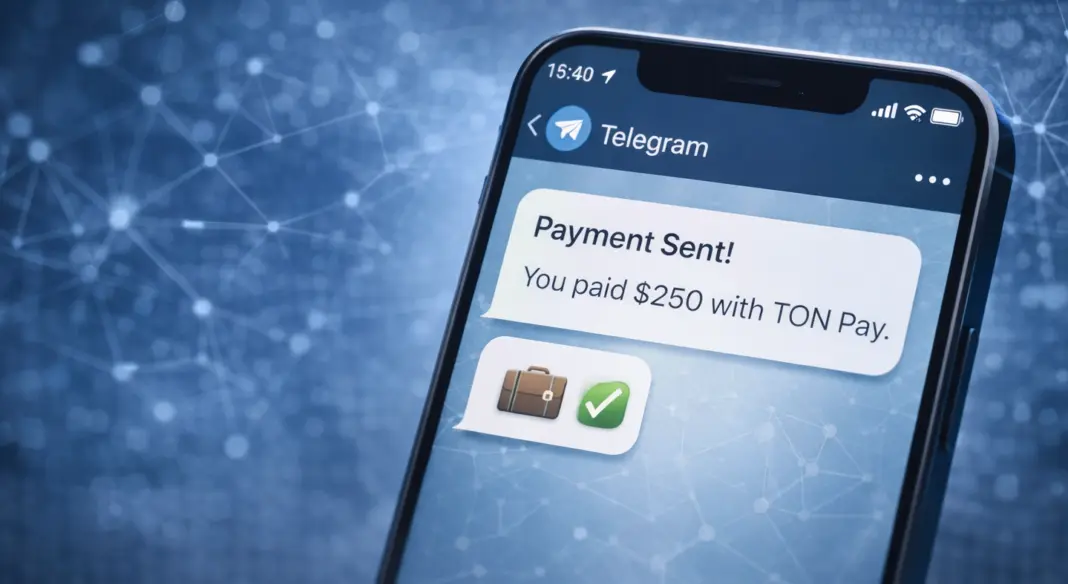
With the launch of the TON Pay SDK, Telegram is moving beyond wallets and transfers toward something more practical: payments at the point of use.
Why Telegram is a different kind of distribution channel
Telegram already has hundreds of millions of active users. It supports bots, mini-apps, and in-app services, and it’s a messaging platform, not a crypto app trying to attract users.
Most crypto payment solutions struggle with distribution. They work technically, but they ask users to change habits, download new apps, or learn unfamiliar flows. Telegram flips that equation.
The user base is already there. The interface is familiar. Payments become an extension of an existing experience rather than a separate destination.
That’s a key difference between theoretical adoption and real usage.
What the TON Pay SDK actually enables
The TON Pay SDK allows developers and merchants to integrate crypto payments directly into Telegram-based services. Subscriptions, digital goods, simple commerce flows. All inside chats, bots, or mini-apps.
This is about letting crypto function as a background payment rail, not about turning everyone into a trader. And that’s where adoption usually accelerates.
Why this fits a broader pattern
Telegram’s move doesn’t happen in isolation. Banks are quietly building crypto infrastructure. Payment firms are testing blockchain rails. Large platforms are experimenting with embedded finance.
The common thread is simple. Crypto adoption follows existing demand, it doesn’t create it from scratch.
When platforms with real users integrate crypto, the technology adapts to the platform. Not the other way around.
Why retail users should care
For retail users, this shift changes what crypto looks like in practice.
Instead of thinking about wallets, bridges, or gas fees, users interact with familiar actions. Pay. Subscribe. Unlock access. The crypto layer becomes invisible, and that fact makes it more likely to be used.
Historically, successful financial infrastructure fades into the background. People don’t think about how card networks settle payments. They just tap and move on.
Telegram’s crypto checkout push follows that same logic.
Adoption happens where friction disappears
Crypto wins by being easier, not by being louder.
Telegram already solved distribution, engagement, and developer access. Adding crypto payments at that layer lowers friction in a way standalone apps rarely manage.
This is why crypto adoption often looks underwhelming at first. No fireworks. No sudden surge.
Just quiet integration.
And that’s usually how lasting infrastructure gets built.
When crypto shows up where users already are, it stops being a concept and starts being a tool.

Crypto market researcher and external contributor at Kriptoworld
Wheel. Steam engine. Bitcoin.
📅 Published: February 11, 2026 • 🕓 Last updated: February 11, 2026
✉️ Contact: [email protected]
Disclosure:This article does not contain investment advice or recommendations. Every investment and trading move involves risk, and readers should conduct their own research when making a decision.
Kriptoworld.com accepts no liability for any errors in the articles or for any financial loss resulting from incorrect information.
