

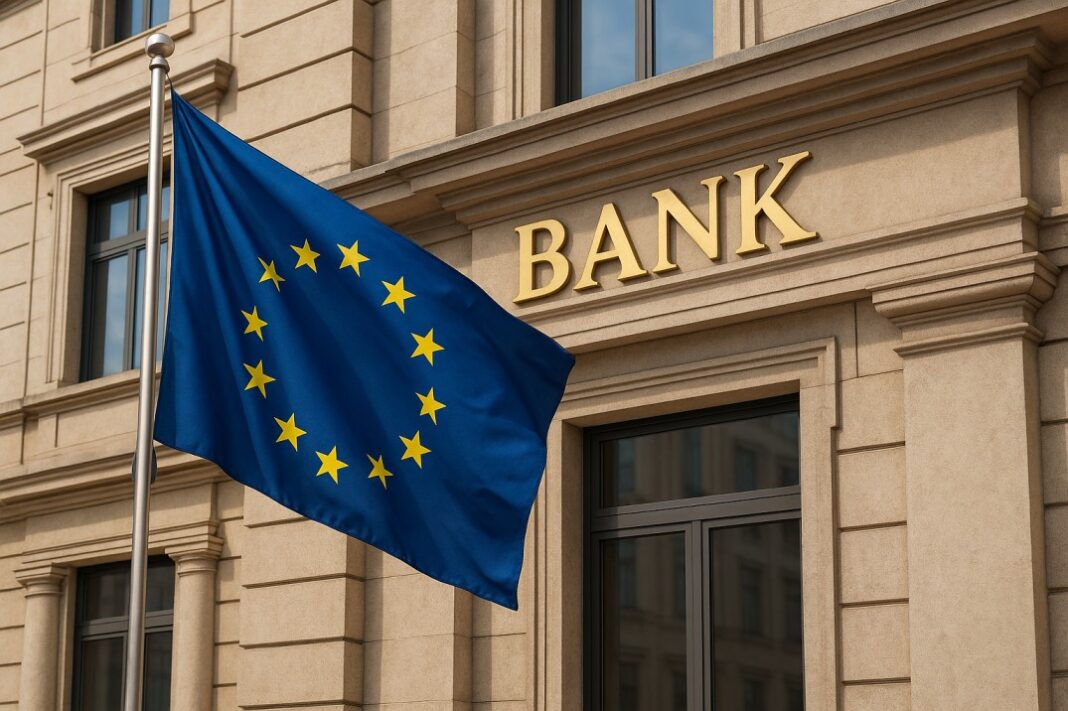

A group of 10 EU banks plans to launch a euro-pegged stablecoin through an Amsterdam-based entity called Qivalis in the second half of 2026, subject to approval from the Dutch Central Bank.
The euro stablecoin would be pegged one-to-one to the euro and operate under the European Union’s MiCA framework.
Stay ahead in the crypto world – follow us on X for the latest updates, insights, and trends!🚀
EU Banks Back Qivalis Euro-Pegged Stablecoin Plan
In a Tuesday notice, BNP Paribas said it joined nine other EU banks to support the Qivalis project for a euro-pegged stablecoin.
The EU banks created Qivalis in Amsterdam to issue a euro stablecoin designed for payments and digital asset transactions inside the European market.
Qivalis plans to issue a euro-pegged stablecoin that tracks one euro per token. A euro stablecoin is a digital token that aims to keep a stable value by holding reserves that match the number of tokens in circulation.
EU banks involved in Qivalis want the euro-pegged stablecoin to function as regulated electronic money under EU rules.
The Dutch Central Bank will act as the home supervisor for Qivalis. Therefore, the EU banks must secure authorization before the euro-pegged stablecoin can launch.
Qivalis targets the second half of 2026, but the timeline depends on the Dutch Central Bank’s review and licensing process.
MiCA Rules Shape Qivalis Euro Stablecoin and Dutch Central Bank Approval
Qivalis plans to make its euro-pegged stablecoin fully compliant with the EU’s Markets in Crypto-Assets (MiCA) regulation.
MiCA sets common rules for crypto issuers and service providers, including capital, reserve and disclosure standards for any euro stablecoin offered in the bloc.
Qivalis CEO Jan-Oliver Sell linked the euro stablecoin project to the wider push toward digital payments in Europe.
“A native euro stablecoin isn’t just about convenience — it’s about monetary autonomy in the digital age,”
he said. He added that the Qivalis euro-pegged stablecoin would create
“new opportunities for European companies and consumers to interact with onchain payments and digital asset markets in their own currency.”
Under MiCA, a euro-pegged stablecoin such as the Qivalis euro stablecoin must keep high-quality reserves and provide clear redemption terms.
The Dutch Central Bank will need detailed information on reserves, risk controls and governance before authorizing Qivalis.
As a result, the EU banks must show that the euro stablecoin can stay fully backed and meet all MiCA conditions over time.
US GENIUS Act and Dollar Stablecoins Frame Euro Stablecoin Debate
The Qivalis euro-pegged stablecoin comes as the United States prepares to implement the GENIUS Act, a federal law for payment stablecoins.
The GENIUS Act, signed by U.S. President Donald Trump in July, sets standards for dollar-linked tokens issued by banks and other approved entities.
Under the GENIUS Act, U.S. authorities will oversee reserves, redemption processes and consumer protection for dollar stablecoins.
This legal framework may strengthen the position of dollar stablecoins in global markets while EU banks are still building a euro stablecoin under MiCA.
Because many onchain transactions today rely on dollar-pegged tokens, the Qivalis euro-pegged stablecoin offers a structure for payments and settlement in euros.
The GENIUS Act in the U.S. and MiCA in the EU now form two separate regulatory pillars for stablecoins, with the euro stablecoin project from EU banks positioned inside the MiCA pillar.
ECB, Olaf Sleijpen and Jürgen Schaaf Track Euro Stablecoin Risks
Regulators are watching the euro-pegged stablecoin sector as it grows. Olaf Sleijpen, governor of the Dutch Central Bank, has reportedly warned that large-scale use of euro stablecoins could affect monetary policy.
His remarks focused on the need to understand how a wide circulation of private euro stablecoin units might interact with interest rates and liquidity tools.
The European Central Bank (ECB) addressed similar issues in a November report.
The ECB said that current risks from stablecoins, including any euro-pegged stablecoin, remain limited in size.
However, the ECB added that “the rapid growth justifies close monitoring,” especially if a euro stablecoin starts to play a larger role in payments or savings.
ECB adviser Jürgen Schaaf noted that euro-denominated stablecoins had a combined market capitalization of less than 350 million euro, or about $407 million, at the time of publication.
As of July, this euro stablecoin market accounted for less than 1% of the global stablecoin market, which remains dominated by dollar-pegged tokens rather than euro-pegged stablecoin structures.
Disclosure:This article does not contain investment advice or recommendations. Every investment and trading move involves risk, and readers should conduct their own research when making a decision.
Kriptoworld.com accepts no liability for any errors in the articles or for any financial loss resulting from incorrect information.

Tatevik Avetisyan is an editor at Kriptoworld who covers emerging crypto trends, blockchain innovation, and altcoin developments. She is passionate about breaking down complex stories for a global audience and making digital finance more accessible.
📅 Published: December 3, 2025 • 🕓 Last updated: December 3, 2025
